
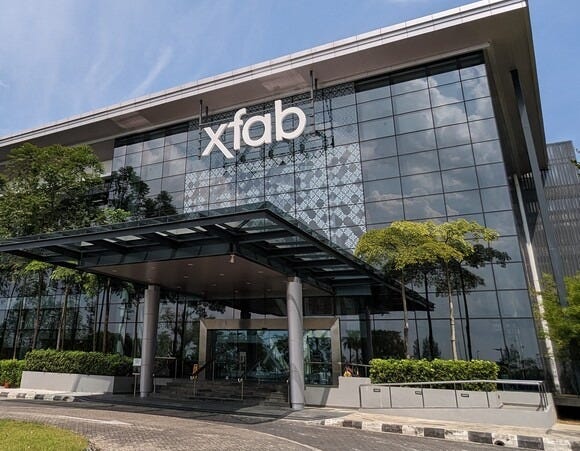
The day everyone discovered X-Fab
For two trading days in May, X-Fab became an AI stock.
End of May, a series of posts from Serenity, a widely followed semiconductor account on X, sent investors rushing into the Belgian chipmaker. The shares roughly doubled within two trading sessions, reaching an intraday peak of €15.88 on 27 May before retreating to €12 by the closing bell. Trading was interrupted repeatedly.
By mid-September, the shares were back around €6. The excitement had largely disappeared. The factories, technologies and potential customers were still there.
That reversal caught my attention. X-Fab now offers a chance to buy a specialised semiconductor manufacturer below book value, with scope for an earnings recovery and growing exposure to AI infrastructure. I bought the stock at €6.
What investors actually own
X-Fab manufactures chips designed by its customers. Its six factories, spread across Germany, France, Malaysia and the United States, specialise in technologies used in cars, industrial equipment and medical devices.
These chips help electronics measure temperature or pressure, process signals and manage electricity. They may receive less attention than advanced processors, but the machines around us depend on them.
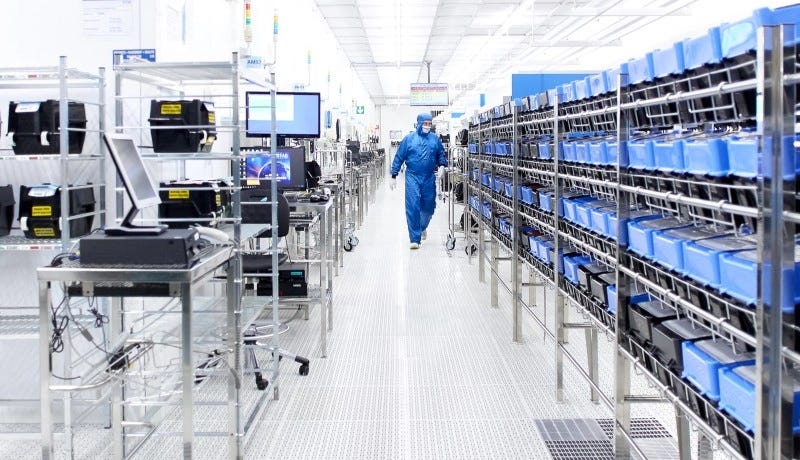
Specialisation matters. Customers need reliable manufacturing processes, and qualifying a chip for a demanding application takes time. Once established, programmes can stay in production for many years. Switching suppliers is therefore more involved than comparing wafer prices.
The weakness is concentration. Automotive represented roughly 59% of second-quarter revenue before accounting adjustments, while Melexis is the largest customer. When carmakers and their suppliers work through excess inventories, X-Fab feels the slowdown through lower factory utilisation.
There was something behind the hype
Serenity drew attention to real capabilities. CEO Damien Macq explained that the posts largely brought together information already available about X-Fab. The presentation encouraged investors to imagine a much bigger AI business.
The clearest opportunity is the infrastructure surrounding AI processors. Datacentres need efficient power conversion, protection devices, monitoring sensors, cooling controls and fast optical connections. X-Fab has technologies addressing these functions.
Silicon carbide and gallium nitride can help manage high voltages efficiently. The move towards 800-volt power distribution in datacentres could therefore create demand for its manufacturing capabilities. Photonics offers another avenue by supporting communication using light.
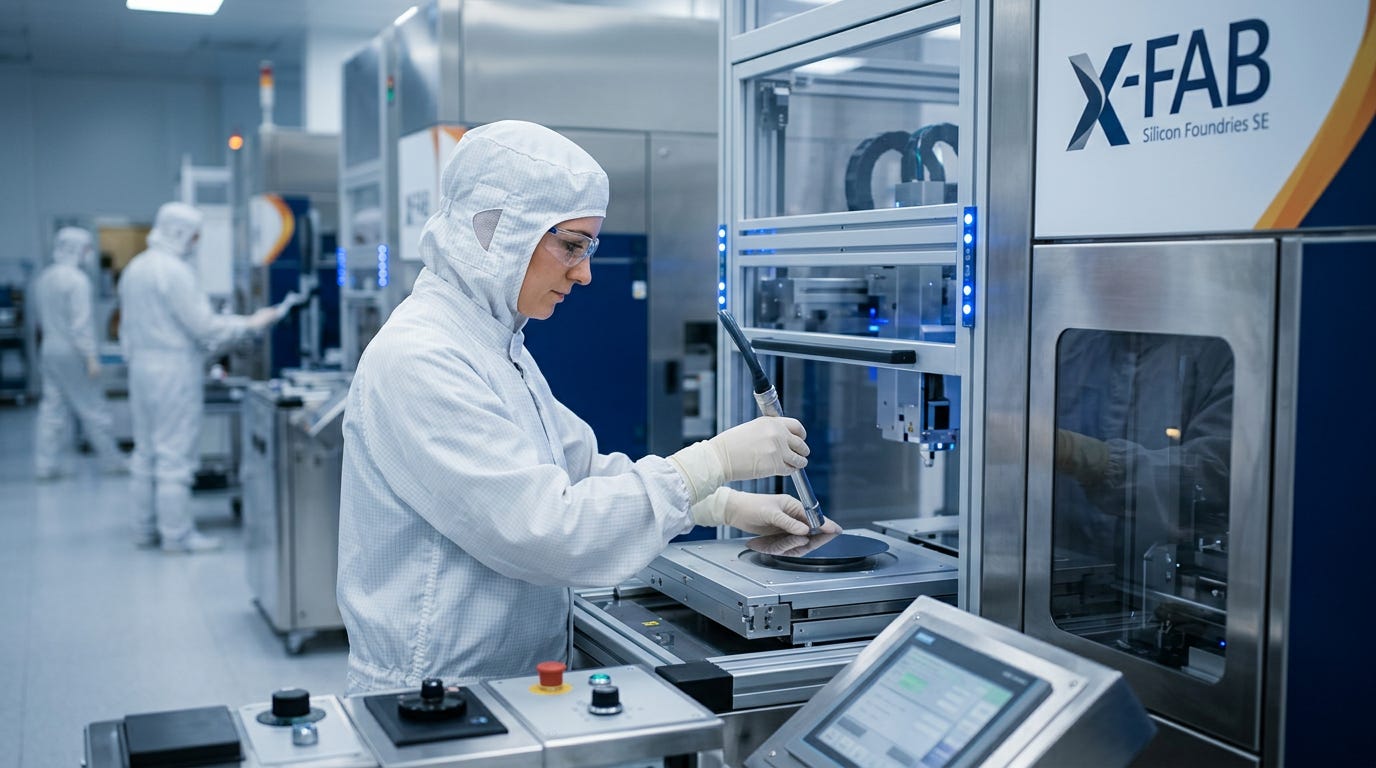
Physical AI adds a broader possibility. Robots and increasingly autonomous machines need to sense their surroundings and control movement and power. That fits X-Fab’s expertise, although the available evidence is much more concrete for datacentres than for direct robotics revenue.
Management sees approximately $300 million of potential annual datacentre revenue over the long term. Kepler Chevreux estimates the current contribution at just $20–30 million. The opportunity is substantial, but the larger figure represents potential business, without a firm timetable. It is not contracted revenue. Volume production in photonics is expected to begin in 2028.
The opportunity is real, even if the market priced it in far too quickly in May. At around €6, investors can revisit the same technologies at a much lower valuation.
The recovery hiding in the factories
The nearer-term earnings opportunity starts with the capacity X-Fab already owns.
Following roughly $1 billion of investment over 2023–2025, the group has expanded its production base. Unfortunately, the additional capacity arrived during a weak demand environment. Kepler Chevreux reported utilisation of about 60% at the end of the second quarter, alongside a cost base that is approximately 70% fixed.
That combination hurts when volumes are low. It also means that extra orders can improve profitability disproportionately as existing equipment and staff produce more wafers.
There are tentative signs of improvement. Automotive bookings strengthened in the second quarter, and management expects a gradual recovery in the second half. However, total quarterly orders were still below revenue and the backlog declined. A sustained recovery remains to be demonstrated.
Lower investment spending could help cash generation as well. First-half capital expenditure fell to about $50 million from $155 million a year earlier. New projects will still require funding, but the recent expansion gives X-Fab room to accommodate growth.
KBC Securities forecasts revenue recovering from about $821 million in 2026 to $997 million in 2028, with the EBITDA margin rising from 18.3% to 26.6%. That would lift EBITDA from roughly $151 million to $265 million. Kepler’s 2028 EBITDA estimate of $268 million is similar. Neither requires the full $300 million datacentre opportunity to have materialised by then.
The main attraction is how much profit can recover as more wafers move through factories whose fixed costs are already being paid. Lower capital expenditure should help, provided operating cash flow improves as well.
Below book, but what is book worth?
At the €5.98 share price quoted on 16 September, X-Fab was valued at roughly €781 million. Its June balance sheet showed $1.04 billion of shareholder equity. The currency distinction matters: the shares trade in euros, while the accounts are reported in dollars.

Calculations use a rounded exchange-rate assumption of $1.15 per euro, rather than an exact closing rate. They combine the dated share price with the latest reported balance sheet.
That implies a discount of roughly 14% to book value. The discount offers some valuation support, while much of the upside depends on improving business performance.
The balance sheet contains substantial physical assets, with little intangible value. Still, a specialised factory is worth what it can earn or fetch from a buyer. Underused equipment, technological change or prolonged losses can undermine that value.
Book value therefore provides a useful reference point. It cannot prevent the shares from falling further. The discount becomes more compelling if the recently expanded factories generate improving returns and cash flows.
This also argues for checking earnings alongside assets. EBITDA helps explain operating recovery, but depreciation reflects a real economic cost in semiconductor manufacturing. Ultimately, shareholders need cash after the investment required to keep those factories competitive.
What could bring investors back?
The strongest catalysts would be improving orders, higher utilisation and better cash generation. More datacentre projects moving into production would also make the growth story easier to value.
Then there is the less predictable possibility: another post from Serenity.
May demonstrated how quickly attention can change the market’s perception of X-Fab. Renewed coverage of its power semiconductors or photonics capabilities could bring buyers back, particularly if accompanied by better results. There is no reliable way to predict either the timing or the size of that response.
I would treat that possibility as an additional source of upside. The investment still needs to make sense if the account never mentions X-Fab again.
Risks and the potential reward
The main risk is that recovery keeps moving further away. Automotive remains weak, Melexis is a major dependency, and additional sales must offset the winding down of older production at Erfurt. Kepler cut its target from €10.50 in July to €8.80 in August as the outlook disappointed. Some of the share-price decline reflects weaker fundamentals.
Financing also deserves attention. June net debt was $312 million, and first-half operating cash flow did not cover capital expenditure. Kepler flagged refinancing needs beyond November 2027. Customer prepayments are also unwinding, absorbing cash as orders are fulfilled. A prolonged downturn could weaken the balance sheet and expose shareholders to dilution.
The €127.4 million subsidy for the new Erfurt facility helps, but does not pay for the entire project. Macq put its total cost at $350–450 million over several years. Growth will still require capital.
My 2028 base case uses $260 million of EBITDA, slightly lowerthan KBC Securities and Kepler. I assume $250 million of net debt, in line with Kepler’s $260 million.
The scenarios use 130.6 million shares and $1.15 per euro. Operating figures and net debt are in dollars, while the resulting share values are in euros. Each value equals EBITDA times the stated multiple, less net debt, divided by the exchange rate and share count. These are illustrative 2028 values, not present values or guaranteed returns.

The base case produces a value of around €10.45 per share, roughly 74% above my entry price of €6.00. It reflects a recovery in the existing business and a 7× EBITDA multiple.
The bull case assumes $300 million of EBITDA, close to what KBC Securities forecasts for 2029, reached a year earlier. With net debt falling to $150 million and an 8× multiple, the value rises to about €14.98. Better utilisation, stronger demand and growing AI-related sales would all help. The bear case allows some earnings recovery, but assumes stubborn debt and a lower multiple. Its €6.06 value is not a downside floor.
At my €6 entry price, I found the potential reward attractive. X-Fab has already built substantial capacity, both brokers expect a meaningful earnings recovery, and AI infrastructure offers an additional source of demand. Book value provides a reference point, while the larger upside depends on turning that capacity into profits and cash. A new Serenity post could accelerate a revaluation, but the business has credible routes to higher value without one.