
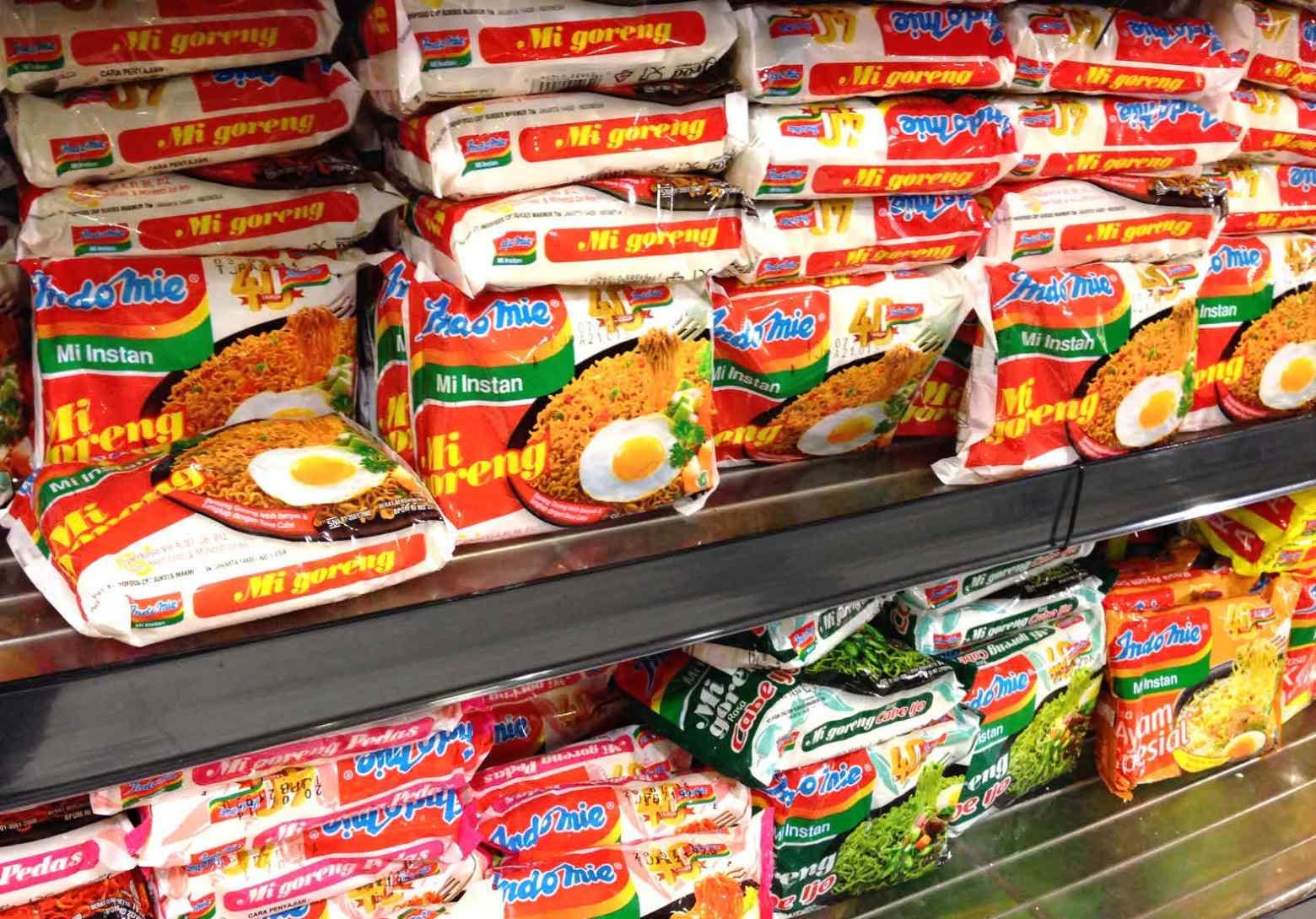
Every once in a while, a company so dominant in its home market trades at a valuation so absurdly low, it forces you to ask: What’s the catch?
PT Indofood Sukses Makmur (IDX: INDF) fits the bill. With a market cap of roughly $3.9 billion, Indofood trades at a P/E ratio of 6 and an EV/EBITDA of 5. That’s bargain territory for a business that touches nearly every Indonesian household.
Indonesia’s Nestlé — but at Basement Valuations
Indofood is the largest packaged food company in Indonesia. It owns legendary brands like Indomie (instant noodles), Indomilk, and Chitato. The company operates across four segments: consumer branded products, agribusiness, flour milling, and nationwide distribution.
This integrated model allows Indofood to control the entire value chain, from palm oil plantations to supermarket shelves. That leads to powerful scale advantages and pricing flexibility—a rarity in emerging markets.
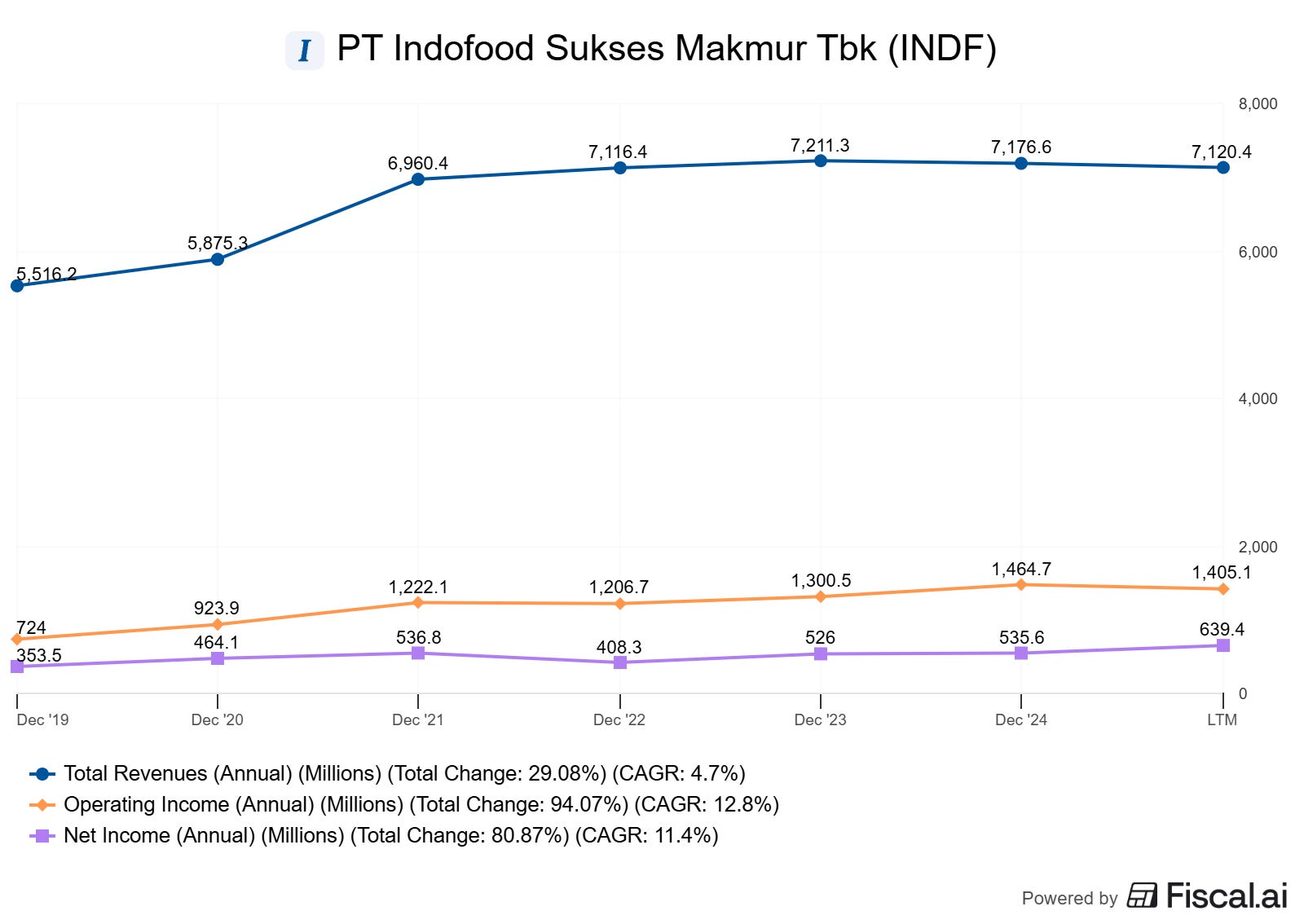
Revenue surpassed $7 billion, and the company generated $639 million in net income, with strong free cash flow and operating margins around 20%.
And yet… the stock trades at a valuation more typical of distressed commodity producers.
A Consumer Staples Powerhouse
Indofood is a rare beast: a dominant staples business in an emerging market with pricing power, vertical integration, and brand strength.
In instant noodles, Indofood holds over 70% market share.
Its flour and agribusiness divisions supply both internal production and third parties.
The distribution arm reaches over 1 million outlets nationwide.
Margins are healthy, and returns on capital are surprisingly robust for such a sprawling operation. ROE hovers around 12%, while ROIC sits near 10% — held back only by conglomerate sprawl.
Management has also been investing in technology upgrades and expanding Indofood’s export footprint, particularly in Africa and the Middle East.
Segment and Geographic Breakdown
While Indofood is expanding globally, its revenue remains heavily concentrated in its domestic market:
Indonesia (87%): core market, driven by strong brand loyalty and a dominant distribution network.
Africa & Middle East (7%): growing presence, especially with instant noodles and snacks.
Other Asian countries (4%): includes exports to neighboring Southeast Asian markets.
Rest of the world (2%): primarily small-scale exports to the US, Europe, and beyond.

Indofood’s operations are divided into four key business segments, each contributing meaningfully to total revenue. Here’s how 2024 revenue breaks down by segment:
Consumer Branded Products (63%): includes noodles, snacks, dairy products, and beverages.
Bogasari (20%): focused on wheat flour and pasta.
Agribusiness (10%): includes cooking oils, margarine, shortening, and palm-related operations.
Distribution (6%): responsible for logistics and distribution of Indofood and third-party products.

The takeaway? Indofood is a consumer staples giant with deep roots in Indonesia, strong export exposure, and diversified operations across the entire food value chain.
Why So Cheap?
Part of the reason lies in location. Indonesia isn’t exactly on the radar of Western institutional investors. Add in currency volatility and a conglomerate structure that lacks transparency, and you’ve got a perfect recipe for neglect.
But beneath that surface lies a rock-solid business:
Net debt is minimal, and cash flows are reliable.
Brand loyalty is unmatched — Indomie is a cultural icon.
Distribution reach is unrivaled, serving even the most remote islands.
And this isn’t a low-growth story either. Revenues have grown 8% per year in IDR or 5% per year in USD, even in tough macro environments. The consistent margins are a proof of the company’s pricing power.
Population growth and rising incomes only strengthen the tailwind. Indonesia’s population is expected to keep growing until 2050.
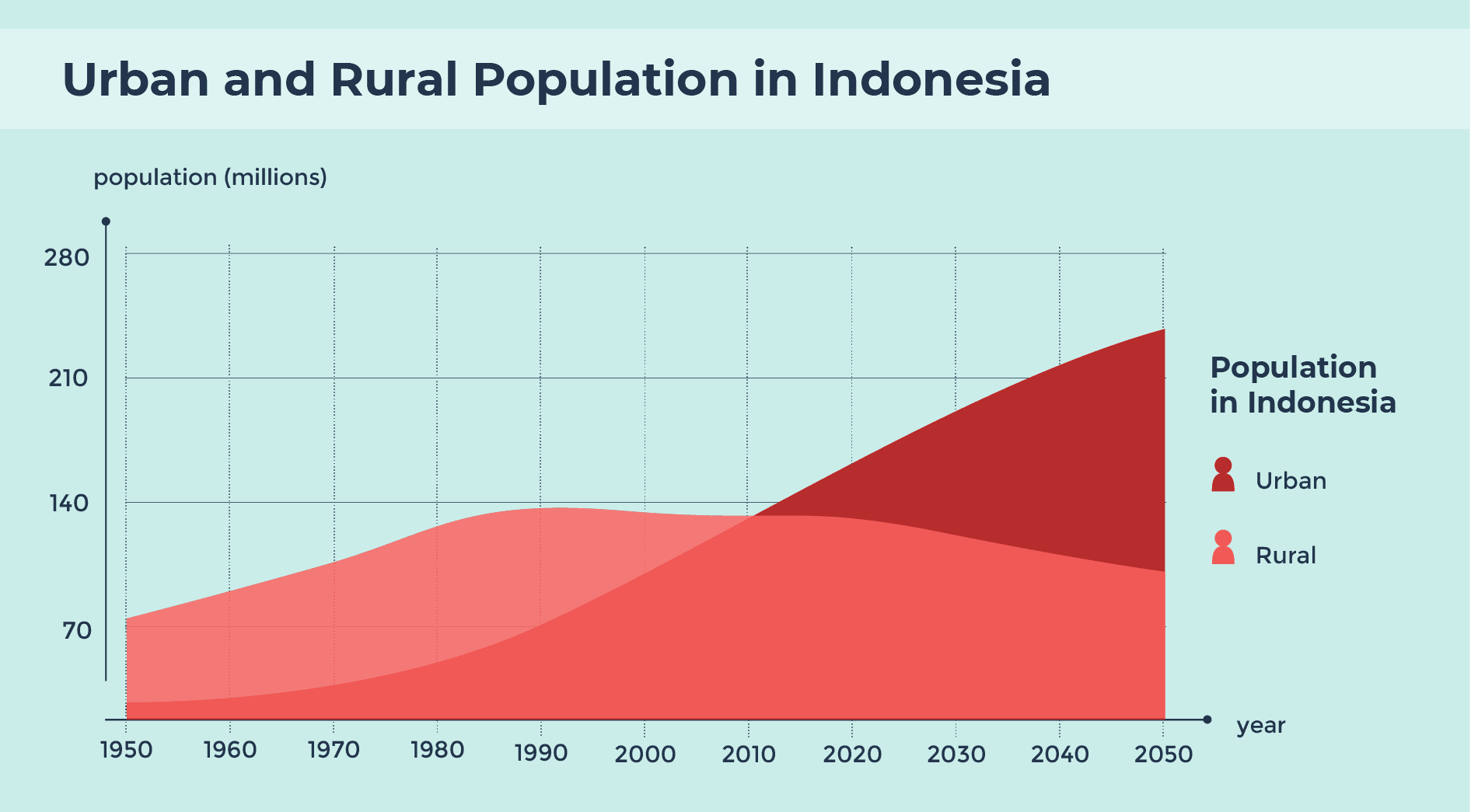
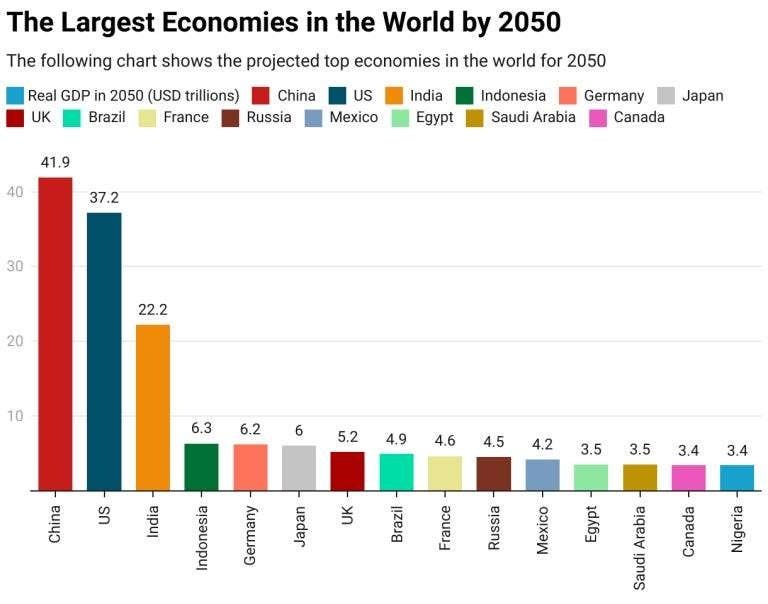
Not only is Indonesia’s population growing, but average income levels are expected to rise significantly as well. As a result, Indonesia is set to become the world’s fourth-largest economy by 2050, just behind the US.
Sum-of-the-Parts Is Worth Far More
One reason for the discount is Indofood’s structure. The company isn’t just a consumer giant — it’s a holding company with major stakes in two publicly traded subsidiaries:
Indofood CBP (ICBP): Indofood owns 80.5% of ICBP, its consumer branded arm that includes the Indomie brand and other high-margin categories. At current market prices, Indofood’s stake alone is worth over $4.9 billion — more than its entire market cap of $3.9 billion.
Salim Ivomas Pratama (SIMP): Indofood also holds a majority stake (around 74%) in SIMP, which owns palm oil plantations and agribusiness operations. This adds another $430 million in hidden value, even at depressed palm oil valuations.
That means investors buying INDF today are getting the rest of the group for free:
Bogasari: This fully owned division handles flour milling and pasta production — a cash-generating backbone with national scale. While unlisted, this segment could conservatively be worth several hundred million dollars on EBITDA multiples alone.
Distribution & International Operations: Indofood’s logistics arm reaches over 1 million outlets, and its export footprint spans Africa, the Middle East, and Asia. Add further value here, plus real estate and other investments.
Even a back-of-the-envelope sum-of-the-parts valuation suggests a discount of at least 40–50%, depending on how conservatively you value the unlisted segments.
At this point, you’re not just betting on earnings growth — you’re buying dollar bills for 50 cents, and getting some upside optionality thrown in for free.
Risks? Of Course. But Are They Priced In?
Indofood isn’t risk-free:
Commodity prices (especially wheat and palm oil) impact margins.
Currency fluctuations can hurt imports and dampen earnings in USD terms.
Conglomerate opacity makes it harder to evaluate capital allocation.
But these risks are well known — and more than baked into the current price.
How Is This Still So Cheap?
Despite dominating Indonesia’s consumer landscape, Indofood trades at a price that makes deep value investors do a double take.
We’re talking about a P/E of just 6, an EV/EBITDA of 45, and a P/OCF of only 3.5 — for a company generating $639 billion in annual profit.
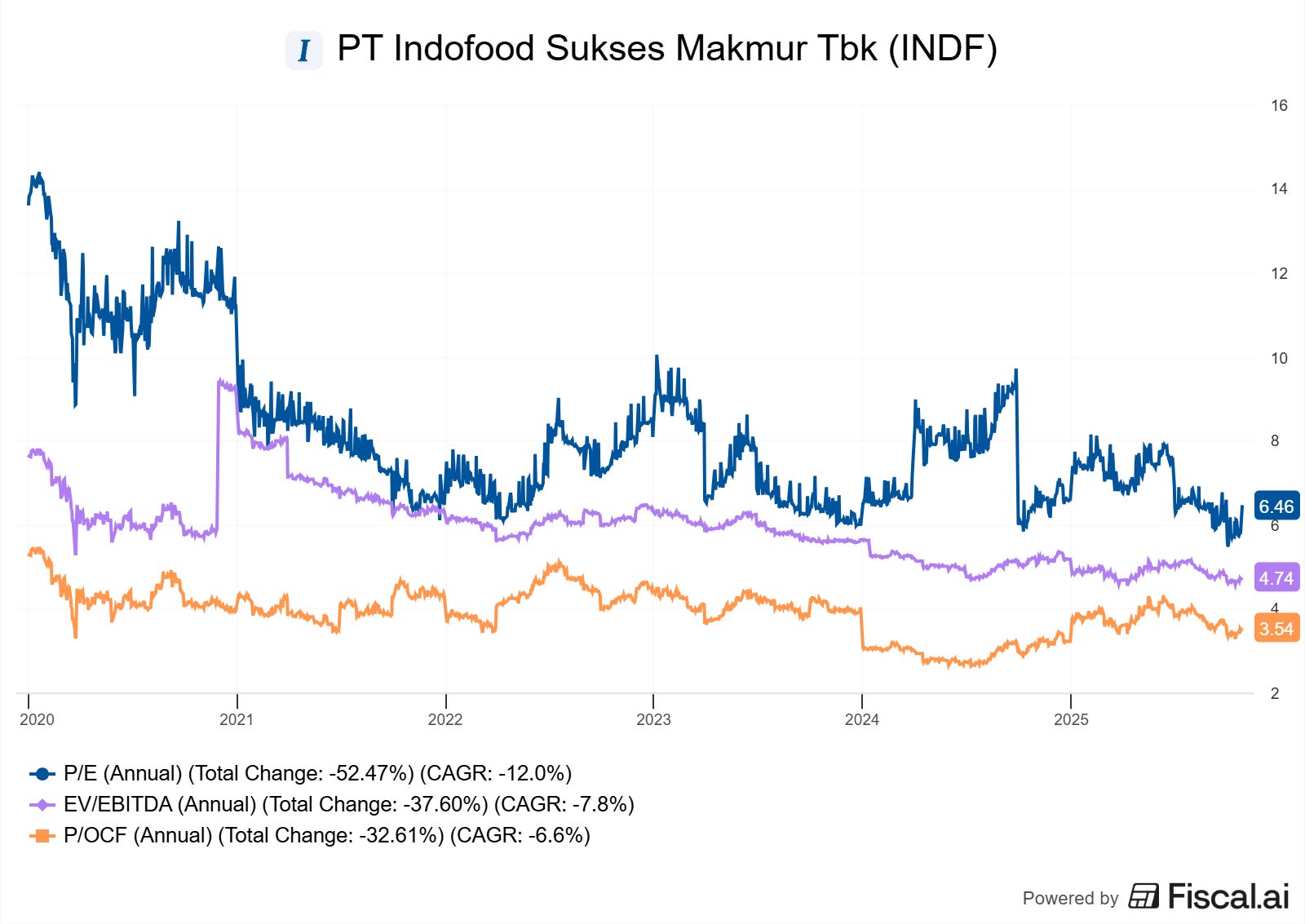
Even crazier: strip out its stakes in Indofood CBP and IndoAgri, and the core business is basically going for peanuts. On a sum-of-the-parts basis, the discount is borderline absurd — even by emerging market standards.
You’re not paying for growth. You’re not paying for optionality. You’re barely paying for the cash flow.
This is deep value in broad daylight.
Deep Value Stocks
I own it through First Pacific, the majority shareholder of Indofood that also trades at a wide discount to NAV. Similar case to your Vivendi analysis.