
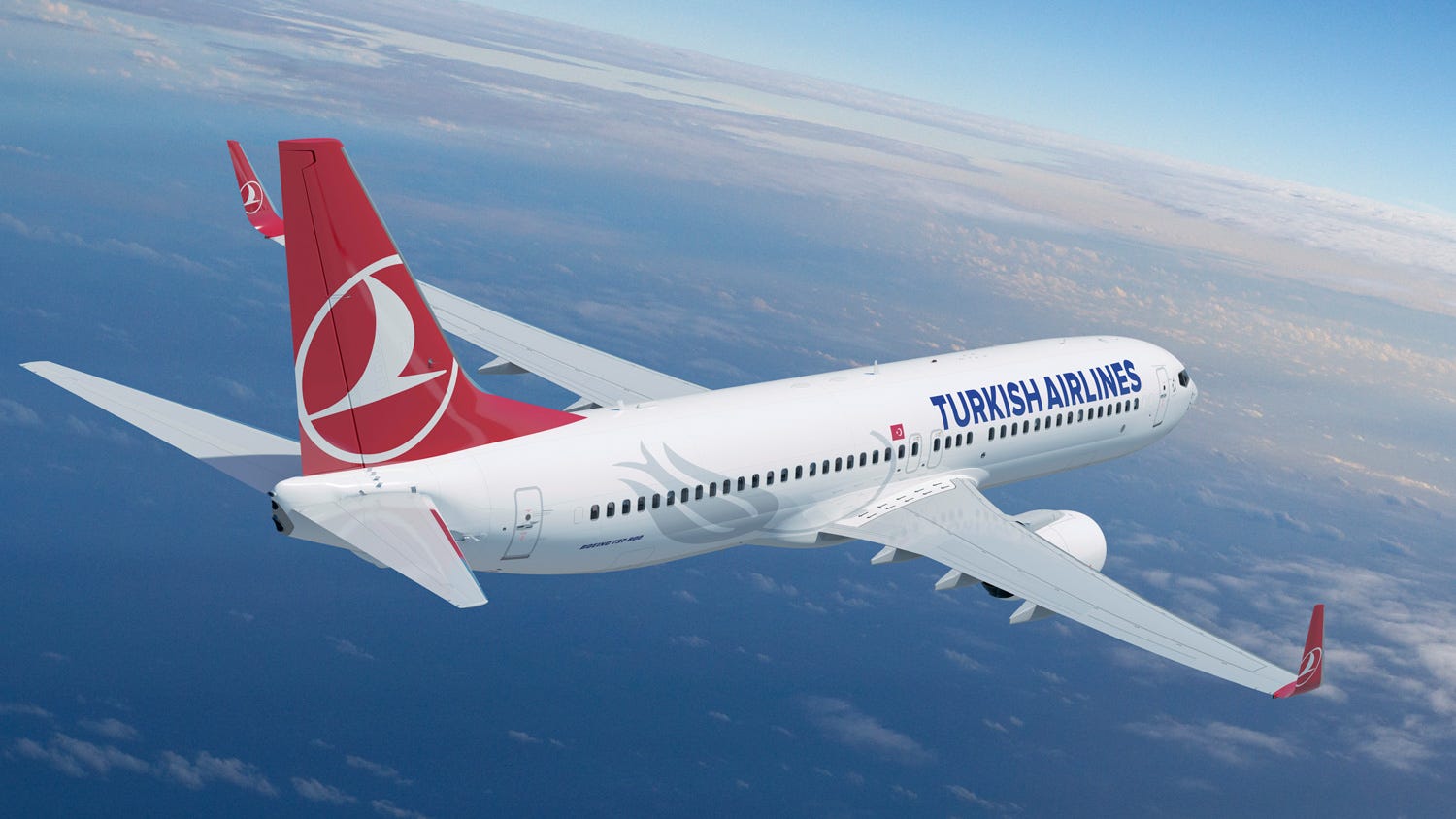
Every now and then, a company trades at such absurdly low multiples that you have to look twice to make sure you’re not missing something obvious.
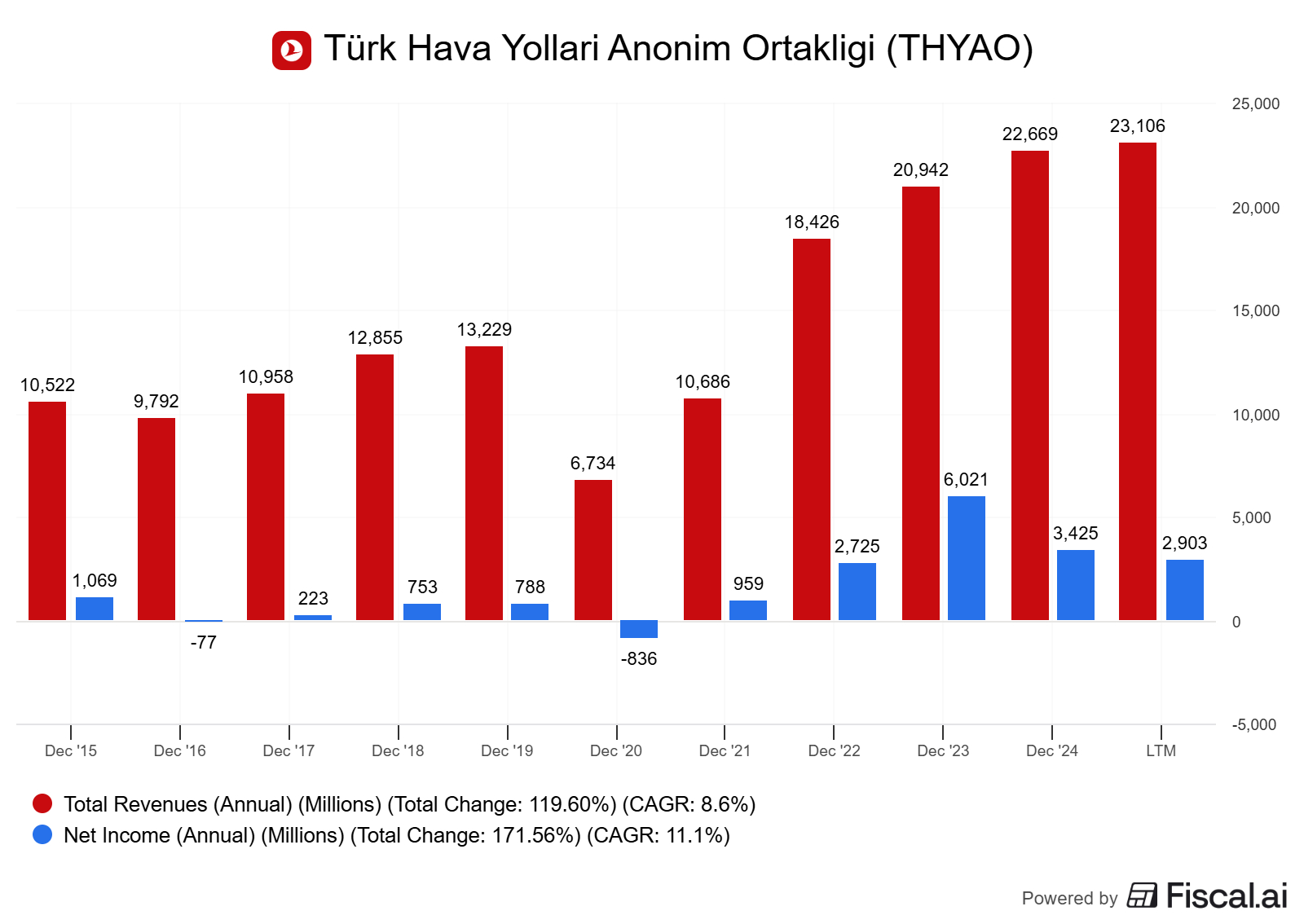
Turkish Airlines (BIST: THYAO), officially known as Türk Hava Yollari Anonim Ortakligi, is one of those rare opportunities hiding in plain sight. A company with $23 billion in annual revenue, robust growth, strong profitability, and global reach—trading at just 3.4× trailing earnings and 3.8× forward earnings.
This isn’t some highly leveraged basket case. It’s one of the world’s largest and most successful airlines.
A global powerhouse in aviation
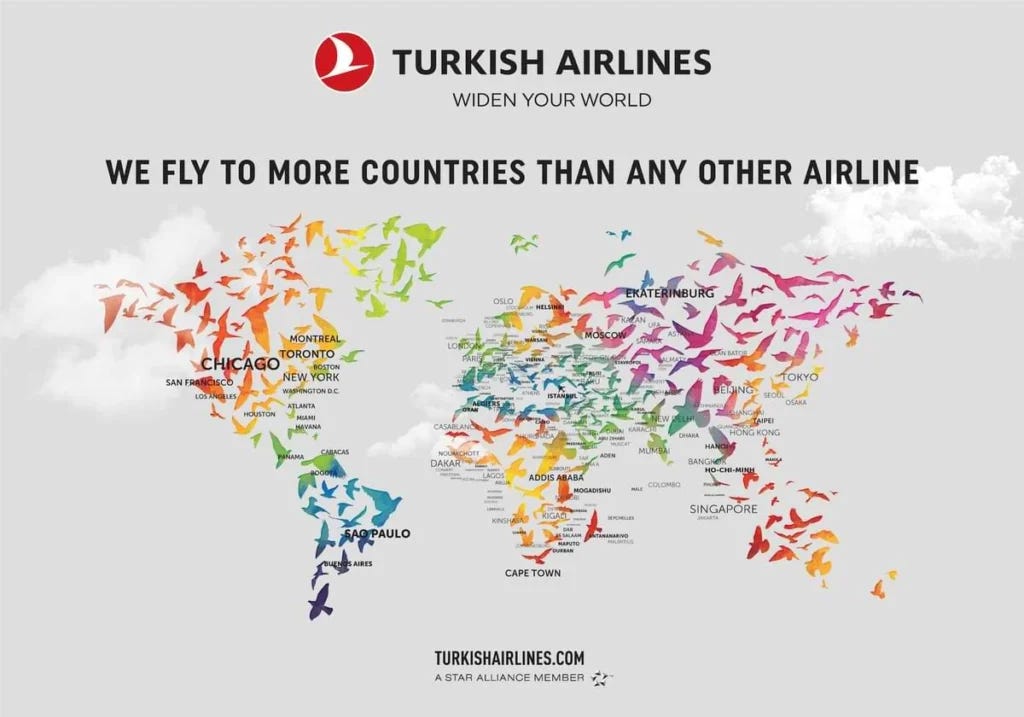
Turkish Airlines is the national flag carrier of Turkey. It operates flights to over 300 destinations across more than 120 countries—more than any other airline in the world. That global footprint is not just for show; it drives massive network advantages, brand strength, and pricing power in key international markets.
And it’s more than just a passenger airline. The company also operates a fast-growing cargo business, runs its own aircraft maintenance division, invests in airport operations, offers in-flight catering, develops aviation-related software, and even manufactures aircraft interior components.
This level of vertical integration provides Turkish Airlines with more control over its supply chain, better margins, and enhanced resilience in the face of supply disruptions. It also enables cross-business synergies and scale that few competitors can match. In many ways, Turkish Airlines resembles an aviation conglomerate more than a traditional carrier.
Explosive growth meets rock-solid margins
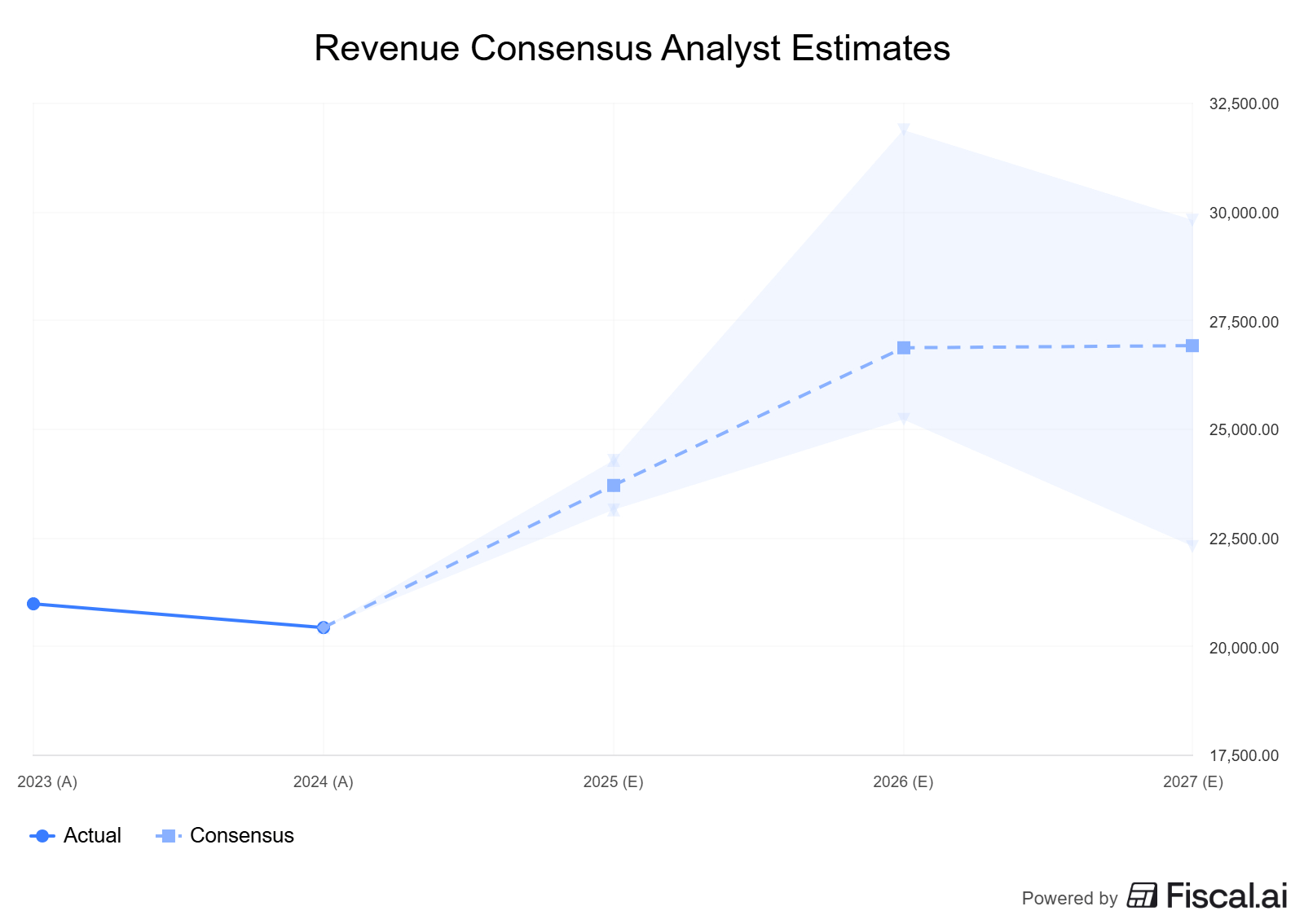
Revenue has grown at a 17% CAGR over the past five years, and analysts expect 23% CAGR over the next two. This is not merely a post-COVID bounce. Turkish Airlines is executing on a long-term strategy of fleet expansion, new route development, and network optimization.
Its fleet now includes over 430 aircraft, and management plans to increase this significantly in the coming years. A younger, more fuel-efficient fleet translates to lower unit costs and higher profitability. Meanwhile, the company is investing in digital transformation to streamline operations and improve customer satisfaction.
Unlike many airlines, Turkish Airlines is consistently profitable. Operating margins remain solid, and free cash flow is strong—even when adjusted for currency effects. Its cargo division has been a major earnings driver, capitalizing on the global boom in air freight. The Miles&Smiles loyalty program continues to gain traction and enhances repeat customer behavior.
A fortress balance sheet in disguise
Despite the stigma that surrounds many emerging market carriers, Turkish Airlines has built a surprisingly solid balance sheet. It has steadily paid down debt over the past several years and actively manages currency exposure.
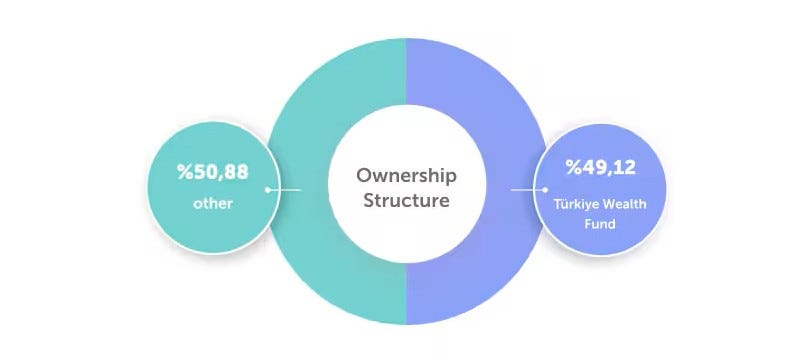
About 49% of the company is owned by the Turkey Wealth Fund, the country’s sovereign wealth vehicle. While some investors view this as a political risk, it also provides long-term strategic alignment and access to capital. It reinforces Turkish Airlines’ status as a systemically important national asset.
The airline has also invested in training academies, MRO (maintenance, repair, and overhaul) capabilities, and ground services—all of which support vertical integration and long-term cost control.
The valuation is laughable
Let’s break it down:
Trailing P/E: 3.4
Forward P/E: 3.8
Price/Sales: 0.4
Price/Book: 0.5
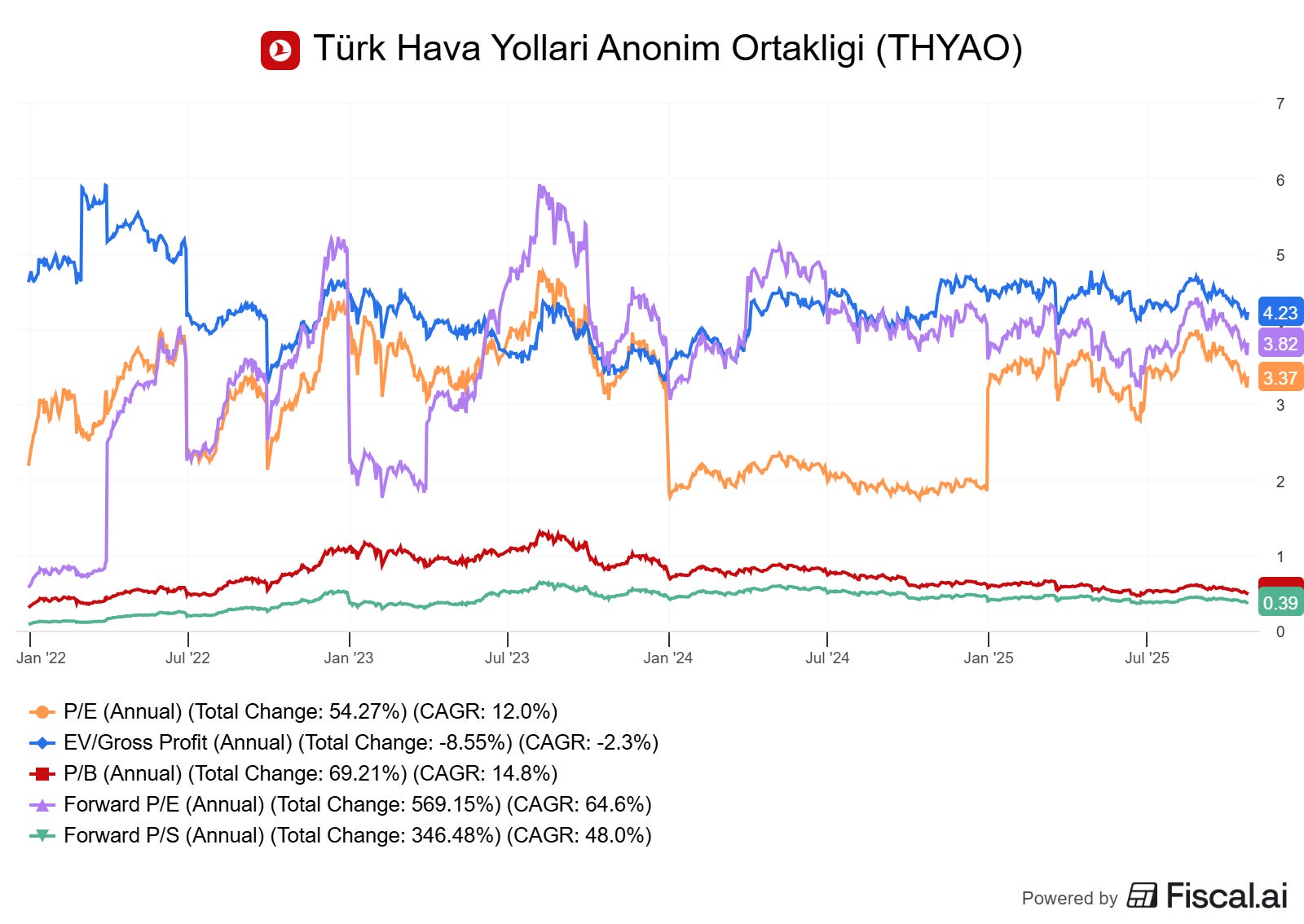
These numbers don’t just suggest value—they scream it. Turkish Airlines is being priced like a distressed cyclical in decline. Yet this is a company with a long track record of resilient earnings, system-wide profitability, and increasing global relevance.
The average airline trades at double or triple these multiples. And most of those peers don’t have Turkish Airlines’ international reach, diversified revenue mix, or cost advantages.
What the market fears
Skeptics often cite several recurring themes: currency volatility, macroeconomic instability, geopolitical risk, and state involvement. All are real. The Turkish Lira has been volatile, and Turkey’s political climate adds complexity.
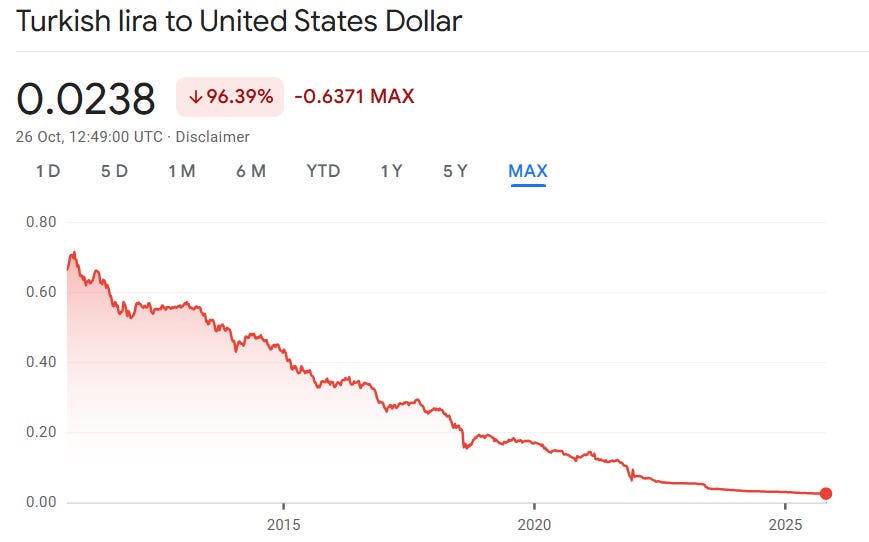
But Turkish Airlines generates most of its revenue in hard currencies, and its costs are increasingly hedged. It’s become better at FX management, and the presence of long-haul routes and international business provides natural diversification.
As for politics, being the national carrier with backing from the Turkey Wealth Fund has given Turkish Airlines strategic stability. It has continued to operate and expand through military coups, recessions, and pandemic-era lockdowns. That resilience should not be underestimated.
Why this opportunity exists
Turkish Airlines is overlooked. It’s listed in Istanbul, denominated in Lira, and lacks widespread analyst coverage. It doesn’t show up on the radar of most Western investors or ETFs. But underneath the geopolitical noise is a cash-generating machine with massive optionality.
This is deep value in the purest sense. A global business trading at 3–4× earnings and growing faster than most developed-market peers. And yet, it remains priced like a subscale regional airline.
Deep value doesn’t always wear the uniform of a declining steel mill or broken REIT. Sometimes it looks like a world-class airline headquartered in Istanbul.
The bottom line
Turkish Airlines isn’t just another airline. It’s a vertically integrated, globally connected, and strategically backed aviation giant.
At 3–4× earnings, it offers one of the most compelling setups in global markets. Investors aren’t just buying earnings—they’re buying scale, resilience, and operating leverage at a deep discount.
You don’t need a rerating for this to work. Just hold, collect, and let the fundamentals compound.
This is deep value at cruising altitude.
— Deep Value Stocks
Great analysis!