
TUI is one of those stocks that always comes with reasons not to own it.
It is cyclical. It owns airlines. It carries debt. And whenever something goes wrong around the Mediterranean, TUI tends to feel it.
2026 has been a good example.
The war with Iran disrupted cruises, pushed fuel costs higher and made travellers more cautious. Bookings slowed, customers started booking later and cash flow weakened.
The share price suffered.
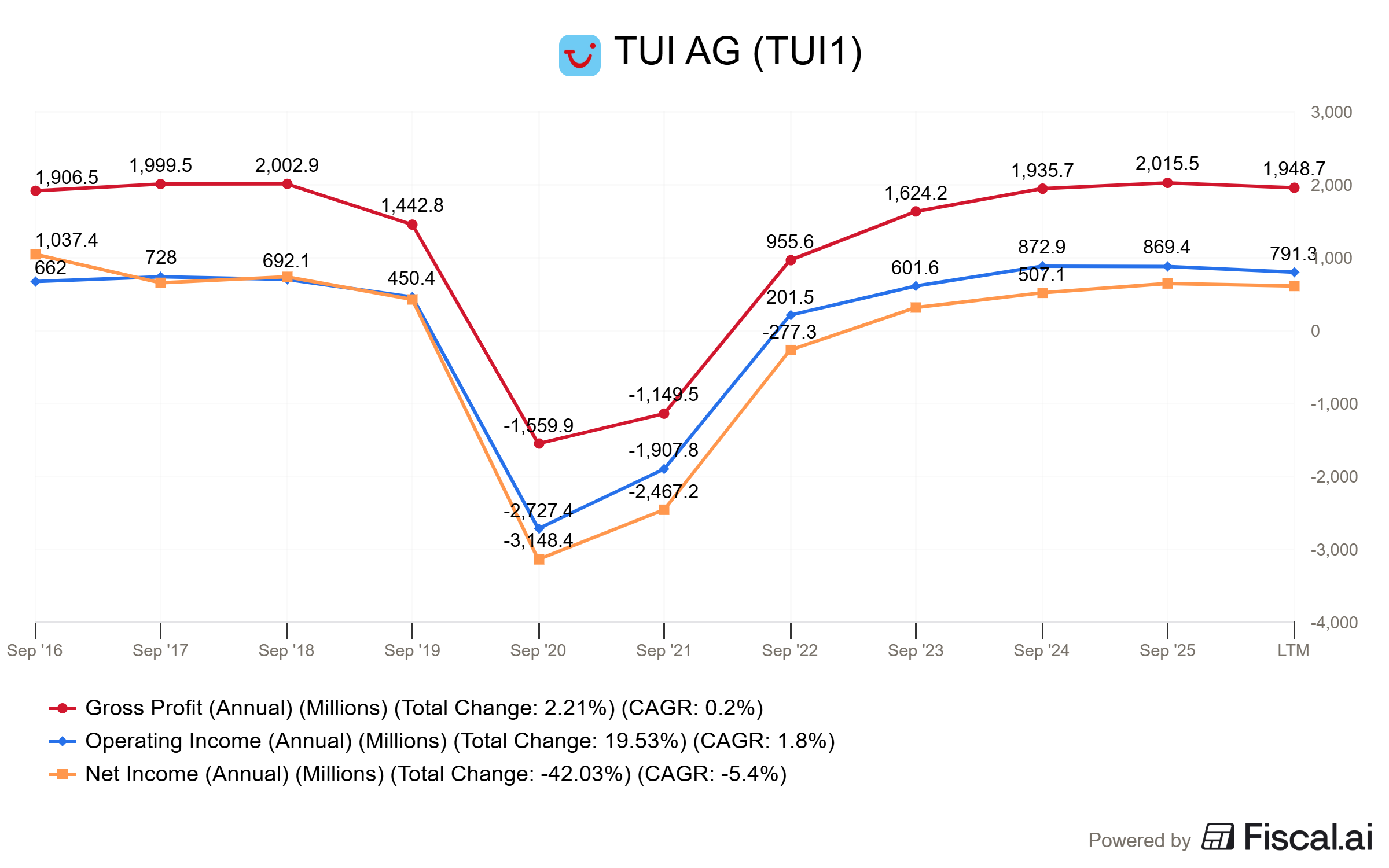
Yet TUI remains solidly profitable, its best businesses continue to perform well and management has kept its full-year EBIT guidance intact.
Meanwhile, the stock trades at approximately:
~6.3x forward earnings
~3.0x forward operating cash flow
~1.9x forward EV / EBITDA
Those are multiples I would normally associate with a business facing structural decline.
I don’t think TUI is one.

The Business Isn’t Broken
TUI is much more than a traditional tour operator.
The group combines airlines and package holidays with hotels, cruise ships and destination experiences. That integrated structure makes the financial statements complicated, but it also hides an important part of the investment case.
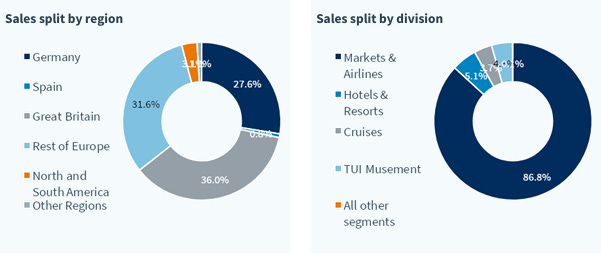
The low-margin Markets & Airlines business generates around 86% of group revenue.
But almost all the profit comes from elsewhere.
Hotels & Resorts, Cruises and TUI Musement — grouped under Holiday Experiences — is expected to generate around €1.26 billion of EBIT in FY2026. Markets & Airlines is expected to contribute only around €100 million.
So approximately 14% of TUI’s revenue generates almost all of its operating profit.
Cruises in particular have become a valuable part of the group. Kepler expects cruise EBIT to rise from €236 million in FY2023 to roughly €510 million this year.
Markets & Airlines remains the weak link. Margins are tiny and competition is intense. That said, Markets & Airlines should not be judged entirely as a standalone profit centre. Within TUI’s integrated model, it also brings customers to the destinations where the group earns money through its hotels, cruises and experiences.
But that also means TUI doesn’t need spectacular growth here. Even a modest improvement in profitability could move group earnings meaningfully higher.
The Latest Numbers Are Mixed
The second quarter was actually quite decent considering the circumstances.
Underlying EBIT improved from a loss of €207 million to a loss of €188 million, despite around €45 million of exceptional headwinds, mainly linked to the Iran conflict and Hurricane Melissa.
Q3 was weaker.
Revenue fell 6% to €5.82 billion and underlying EBIT dropped 27% from €321 million to €234 million.
The split tells the story:
Hotels & Resorts: €123 million EBIT
Cruises: €132 million EBIT
TUI Musement: €23 million EBIT
Markets & Airlines: €17 million loss
Markets & Airlines had generated almost €50 million of profit a year earlier.
Cruises also looked weaker, but Q3 included another €20 million direct hit from the Middle East conflict. Excluding that effect, cruise EBIT would actually have grown year-on-year.
There is no point pretending FY2026 has been a strong year.
What I find more interesting is that TUI still expects €1.1-1.4 billion of underlying EBIT despite everything that has happened.
Geopolitics Moved Into the P&L
Geopolitical risk used to sit somewhere near the bottom of the TUI risk section.
This year it became a real cost.
The escalation in the Middle East disrupted cruise operations, affected demand for destinations such as Turkey, Cyprus and Egypt and made customers more cautious about booking.
Summer 2026 booked revenue was still down 6% year-on-year at the Q3 update.
But the most recent four weeks showed 7% growth in booked revenue.
That distinction matters.
Consumers don’t necessarily seem to be abandoning their holidays. They are waiting longer before committing.
TUI has responded by cutting its own-risk summer airline capacity by 5%, rather than filling excess seats through aggressive discounting.
Fuel is another risk, but the current summer is largely protected:
96% of Summer 2026 fuel is hedged
63% of Winter 2026/27
39% of Summer 2027
The geopolitical situation can obviously deteriorate again. But TUI has already absorbed significant disruption and is still expected to generate more than €1 billion of EBIT.
The Balance Sheet Took a Step Back
This is the part I like least.
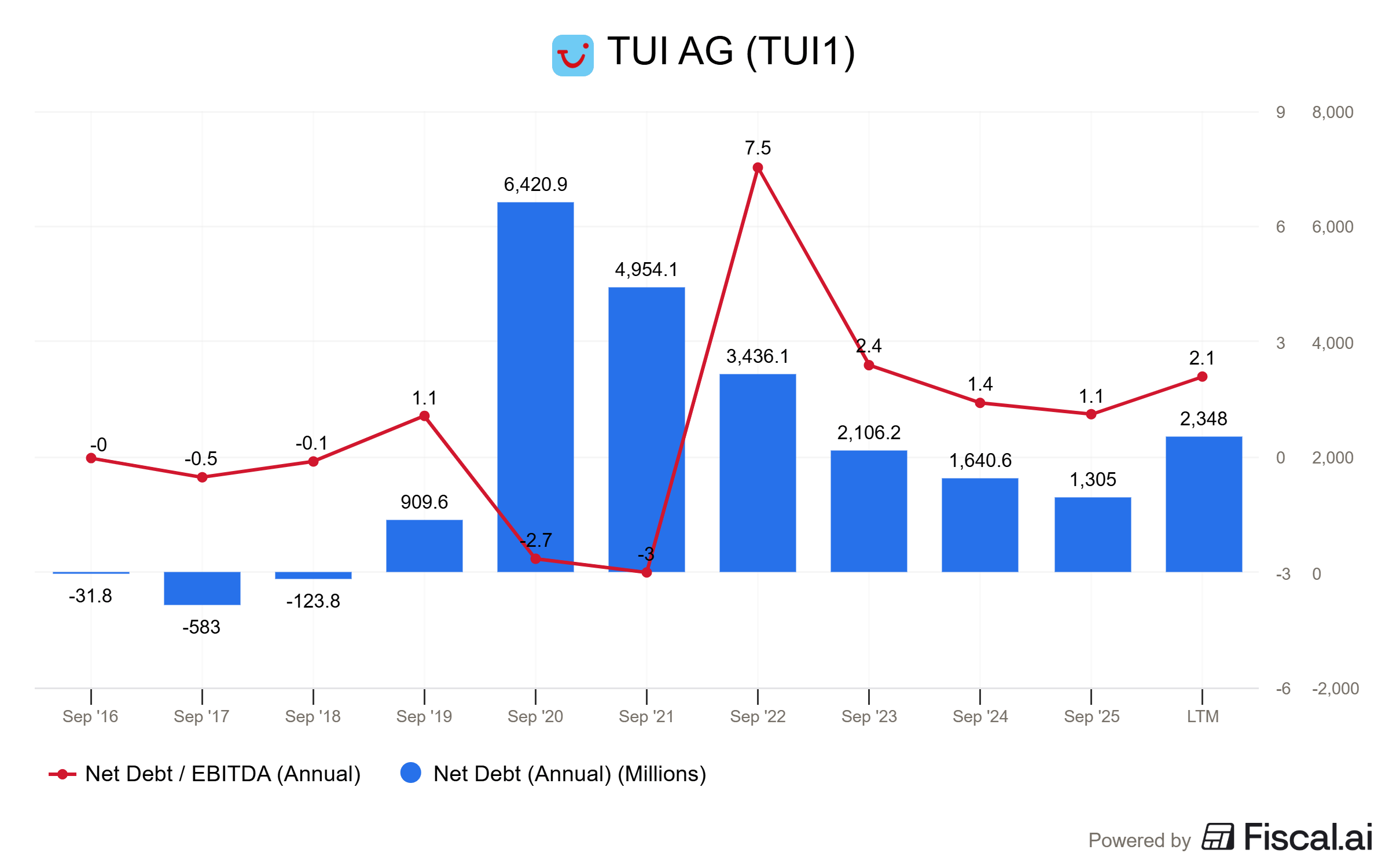
Net debt increased to around €2.35 billion, from €1.91 billion a year earlier.
A large part of the increase comes from working capital. Customers booked later, which meant tourism advance payments after nine months were around €430 million lower than last year.
Q3 free cash flow fell from €937 million to €676 million.
TUI also reduced FY2026 investment guidance from €860-900 million to €810-830 million.
That is clearly worse than expected.
But I don’t see a return to the Covid-era balance-sheet problems either. Leverage remains manageable, Kepler Chevreux sees no covenant issue and the next debt maturity it highlights is only around €180 million in July 2028.
The deleveraging story has been delayed, not destroyed.
More Quality Than the Multiple Suggests
Management is also slowly changing the economics of the weaker part of the group.
Traditional package holidays require TUI to commit capacity months in advance. Dynamic packaging allows customers to combine flights and hotels closer to departure, often using third-party supply.
That reduces capacity risk and gives TUI more flexibility.
Dynamic packages represented around 18% of bookings in Q3.
The TUI app represented 12.9% of sales, up from 11.4% in Q2, with app sales growing around 20% year-on-year.
None of this turns TUI into Booking.com.
But it should gradually improve Markets & Airlines while hotels, cruises and experiences become a larger part of group profits.
That mix shift is important.
The Valuation Looks Too Low
This is ultimately why I continue to like the stock.
At around €7 per share, TUI’s market value is only around €3.5 billion.
On forward numbers, that works out to roughly:
6.3x earnings
3.0x operating cash flow
1.9x EV/EBITDA
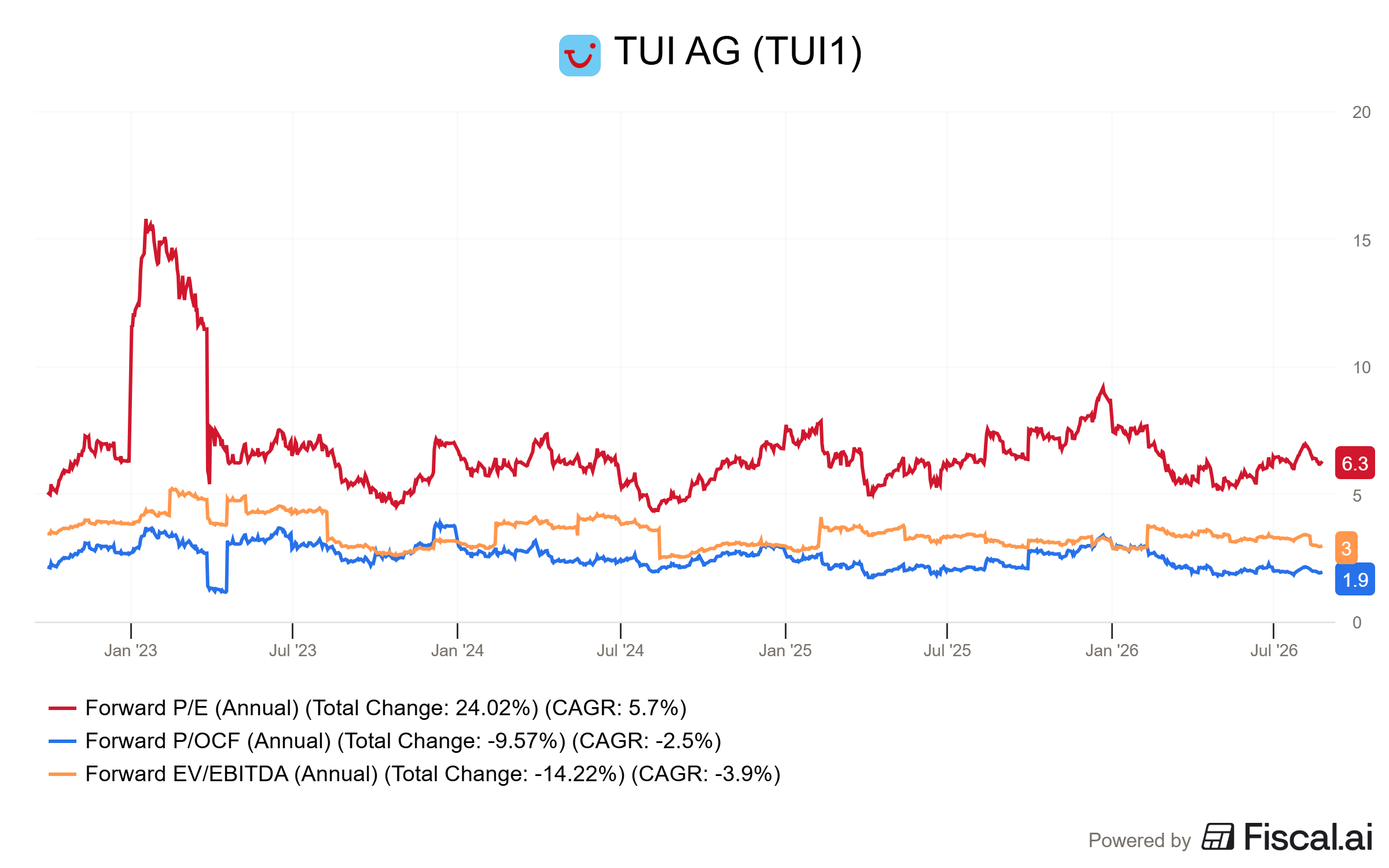
There are caveats around the EV calculation because TUI has leases, joint ventures, minorities and large customer prepayments.
But you don’t need aggressive assumptions to make the stock look cheap.
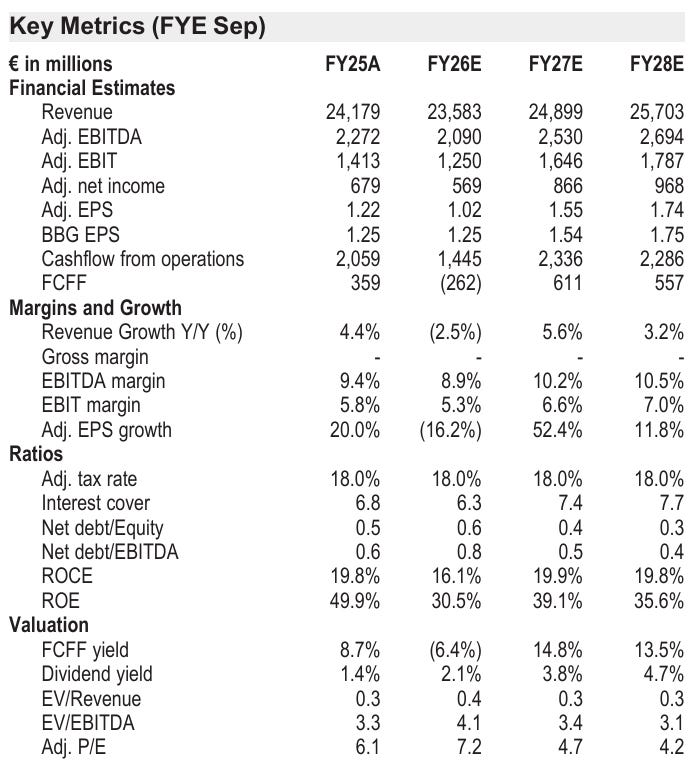
Even more conservative sell-side estimates put TUI at around 5x FY2027 earnings. J.P. Morgan estimates around 3.4x FY2027 EV/EBITDA versus a pre-Covid five-year average of roughly 5.5x.
I am not arguing that TUI deserves a premium valuation. It doesn’t.
But there is a big difference between deserving a discount and trading at three times operating cash flow.
What Could Close the Gap?
The biggest catalyst is simply better bookings.
If the recent +7% trend continues, confidence in FY2027 estimates should recover.
Other obvious catalysts are lower net debt, a normalisation of Markets & Airlines profitability, continued growth in Hotels, Cruises and Musement, and a calmer geopolitical environment. TUI doesn’t need all of them.
If the company can earn somewhere around €1.40-€1.50 per share in a more normal year, even an 8x earnings multiple would imply roughly €11-12 per share.
At 10x, the outcome moves towards €14-15.
Neither valuation looks aggressive to me.
What do the analysts say?
I’m not the greatest fan of sell side analyst recommendations, but JP Morgan has an Overweight advice with a price target of €12.20 (+74% upside) and the following projections:
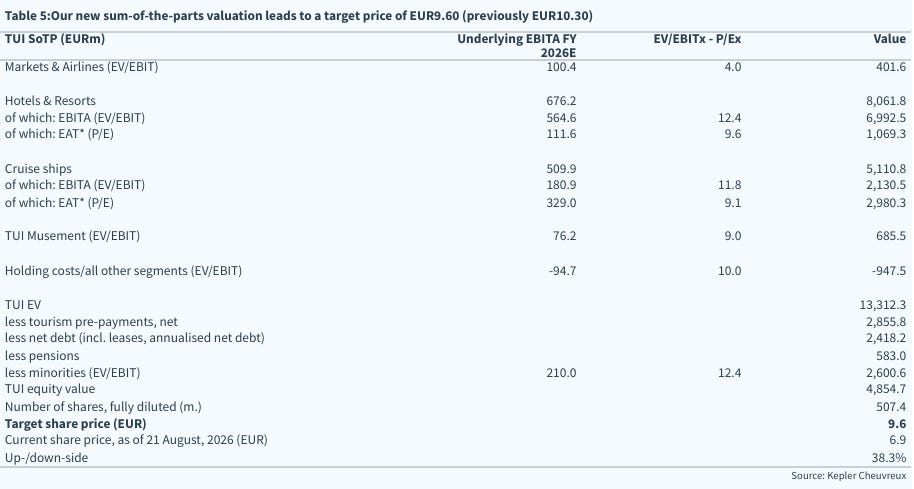
Kepler Chevreux values the stock at €9,6 (+38% upside).
Bottom Line
TUI has had a difficult year.
Bookings weakened. Cash flow deteriorated. Net debt increased. Markets & Airlines struggled. And geopolitical risk turned into actual costs.
Yet the company still expects €1.1-1.4 billion of underlying EBIT this year. Its hotel, cruise and experiences businesses remain highly profitable, while recent booking trends have improved.
And the stock trades at roughly 6.3x forward earnings, 3.0x operating cash flow and 1.9x EV/EBITDA on my estimates.

For me, that valuation more than compensates for many of the risks.
TUI doesn’t need everything to go right.
It probably just needs things to stop going quite so wrong.
At around €7, I think the shares remain significantly undervalued.
It’s dirt cheap