
Every now and then, you stumble upon a company that seems priced for trouble — yet the numbers tell the opposite story.
Nomad Foods (NOMD) is one of those rare cases.
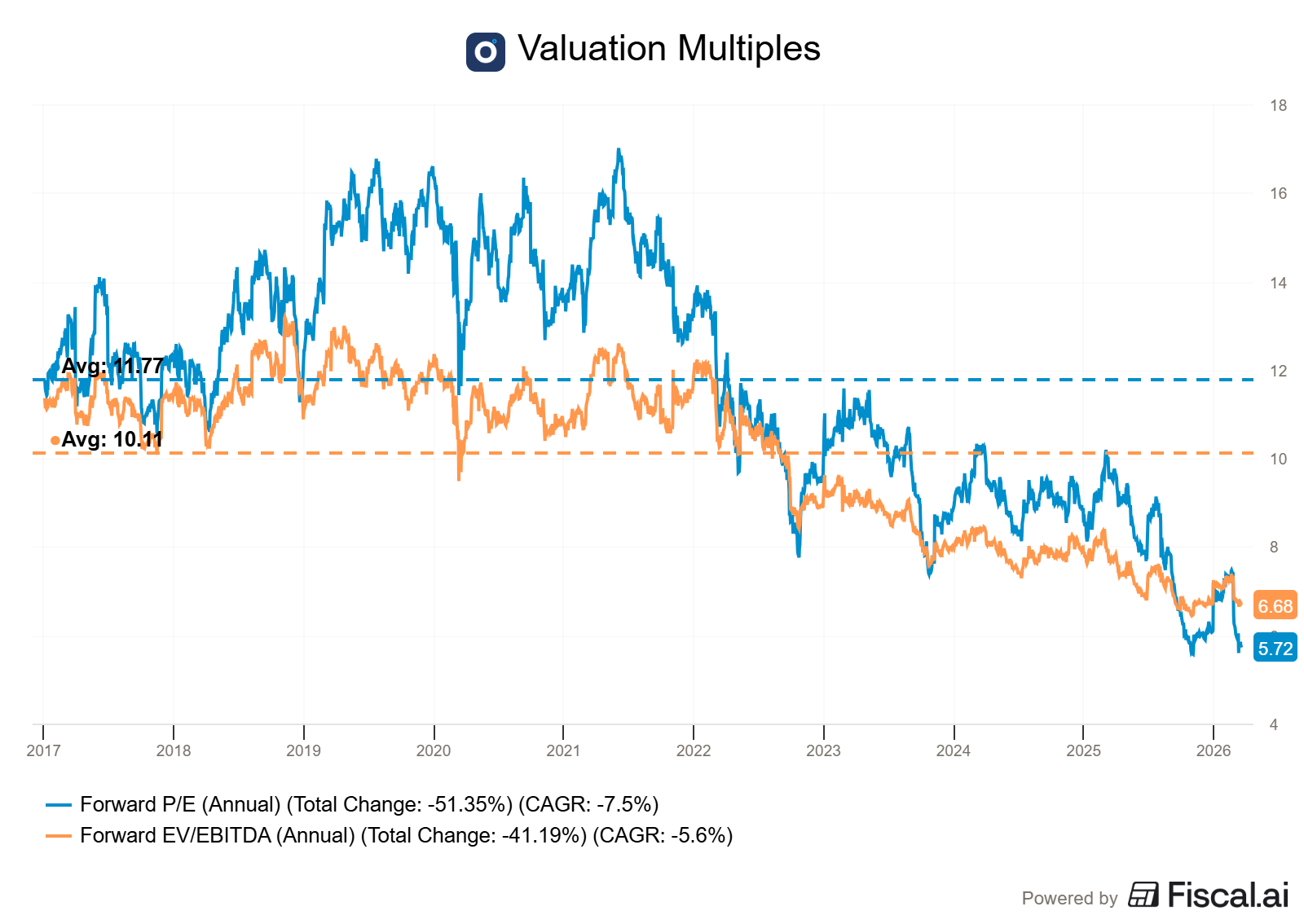
At a forward P/E of 5.7, EV/EBITDA of 6.7, and EV/sales of 1.1, the market is valuing Europe’s frozen food champion like a struggling cyclical. In reality, Nomad is a stable, cash-generating machine with strong brands, predictable earnings, and shareholder-friendly capital allocation.
A quiet empire built on frozen food
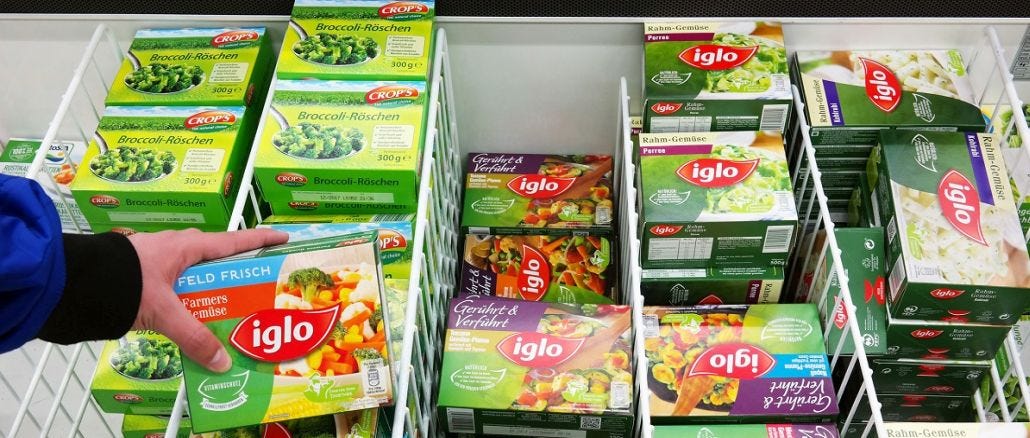
At the heart of Nomad’s business lies something simple: frozen meals, fish, and vegetables. The company owns iconic brands like Iglo, Birds Eye, and Findus — household names across Europe.

Through scale, logistics, and brand loyalty, Nomad has become the undisputed market leader in Europe’s frozen food segment.
This is a market that’s growing structurally — not shrinking — thanks to:
Sustainability, as frozen food reduces waste and extends shelf life,
Convenience, for consumers balancing work and affordability,
Consistent quality, enabled by large-scale production and distribution.
The result is a steady business with high visibility, even in turbulent economic times.
Predictable cash, year after year
Unlike most “cheap” stocks, Nomad’s fundamentals are boring in the best possible way. Revenue barely moves — and that’s the point. It’s reliably stable.
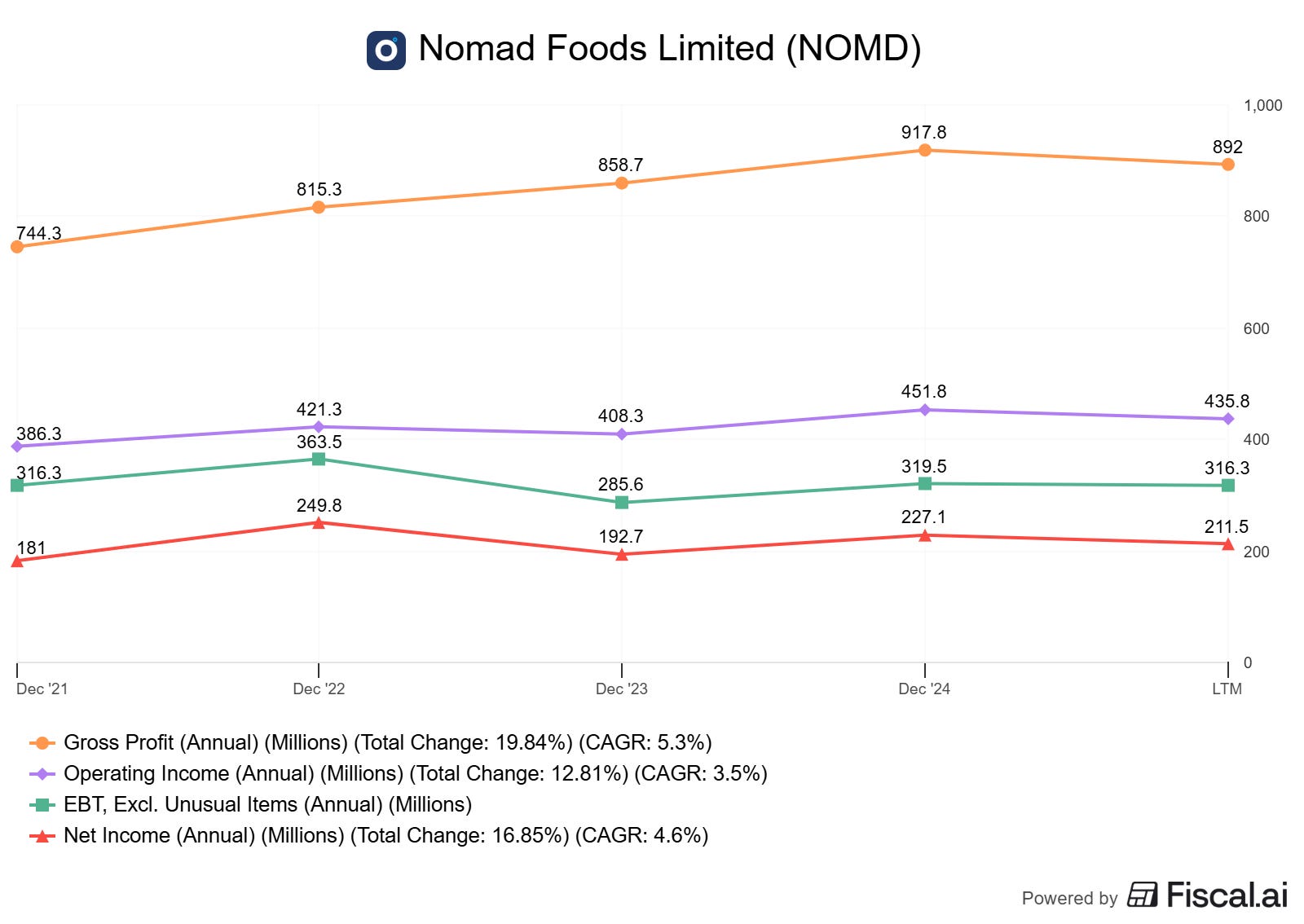
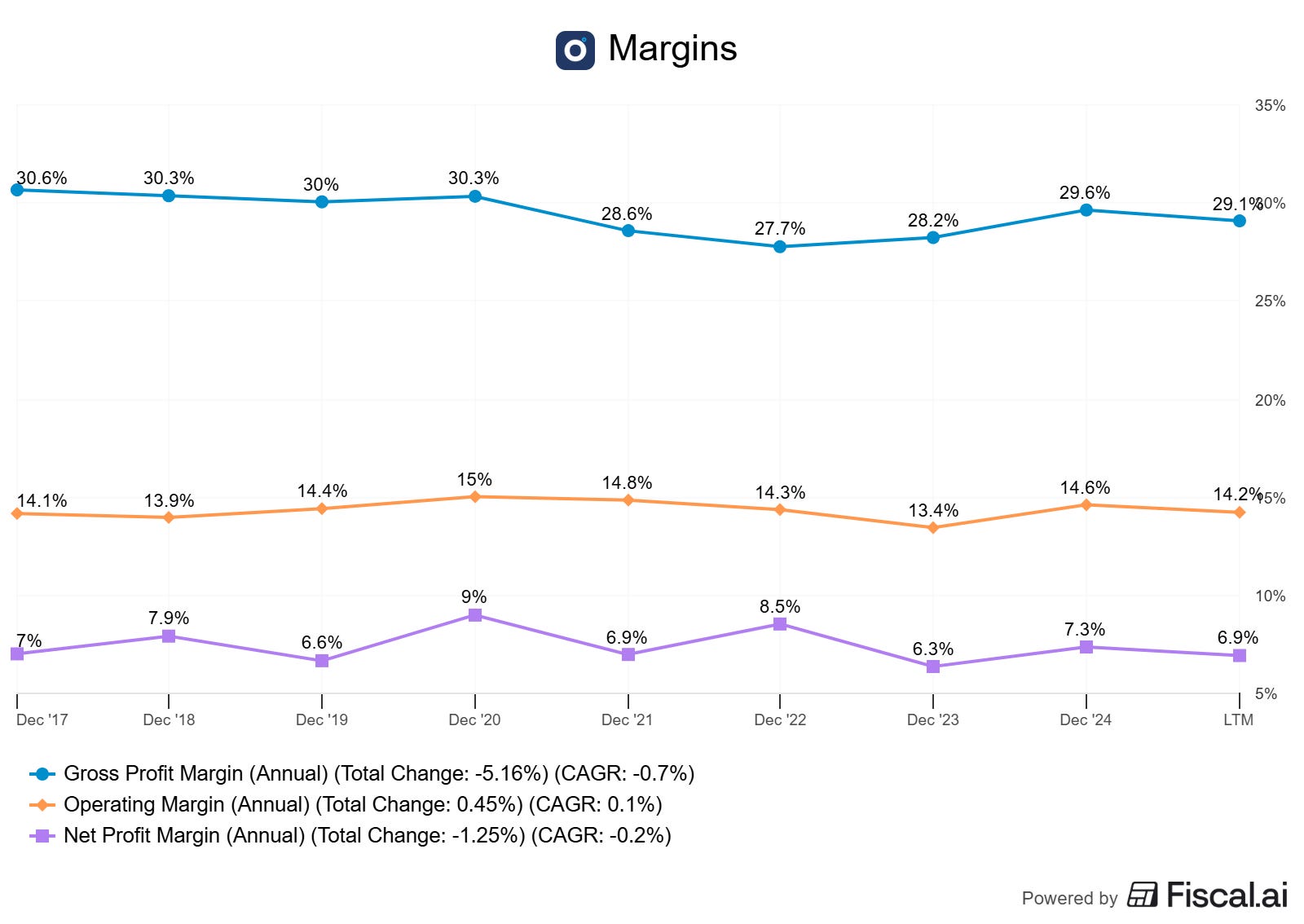
Operating margins hover around 15%, and free cash flow remains strong across cycles.
This consistency gives management the confidence to aggressively return capital to shareholders.
Quietly shrinking the share count
Nomad Foods is one of Europe’s most shareholder-friendly consumer staples.
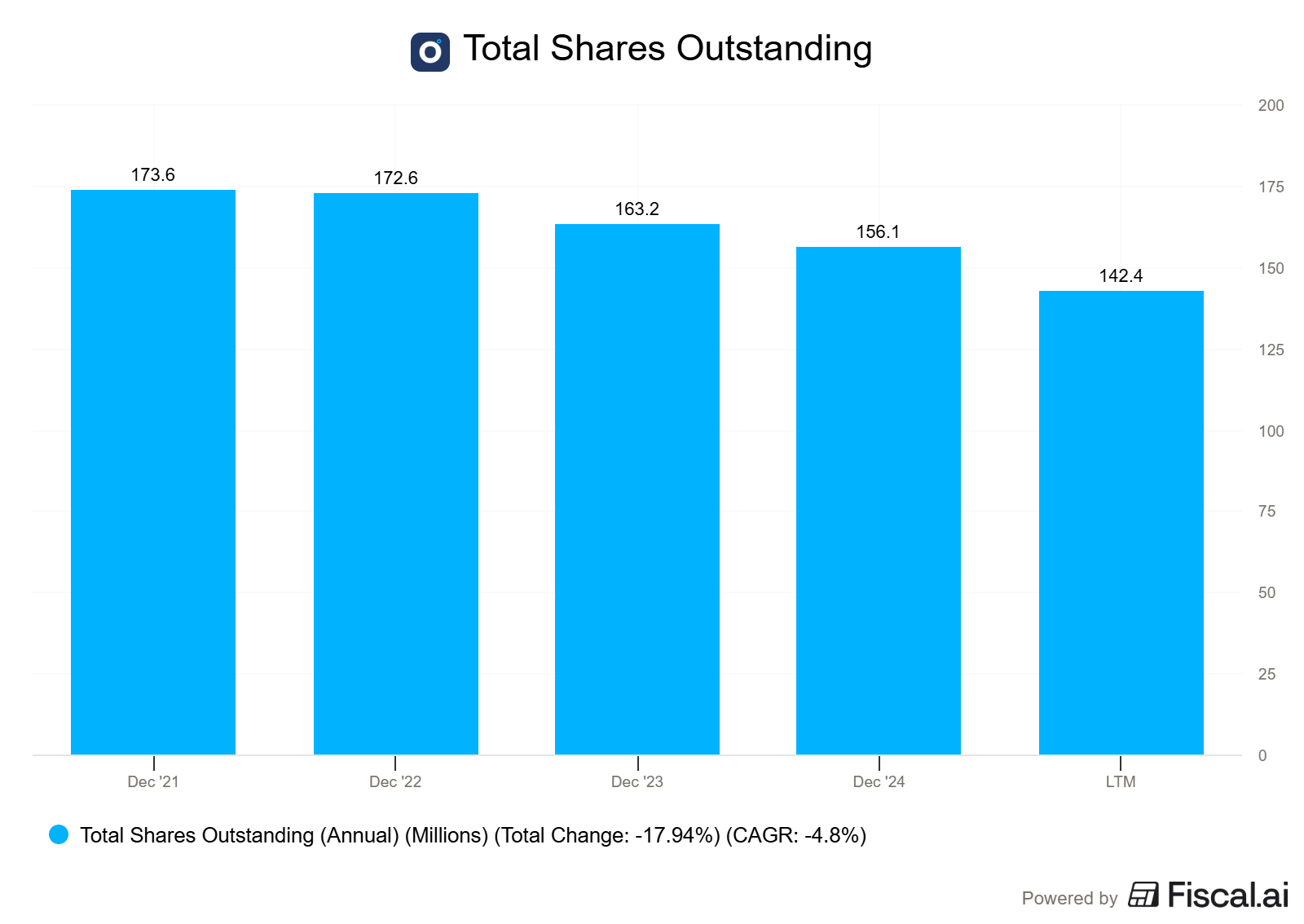
In the past twelve months alone, the company repurchased 9% of its shares outstanding — a buyback yield of 9% — and paid a dividend yield of 7.0%.
Combined, that’s a total shareholder yield of 16%.
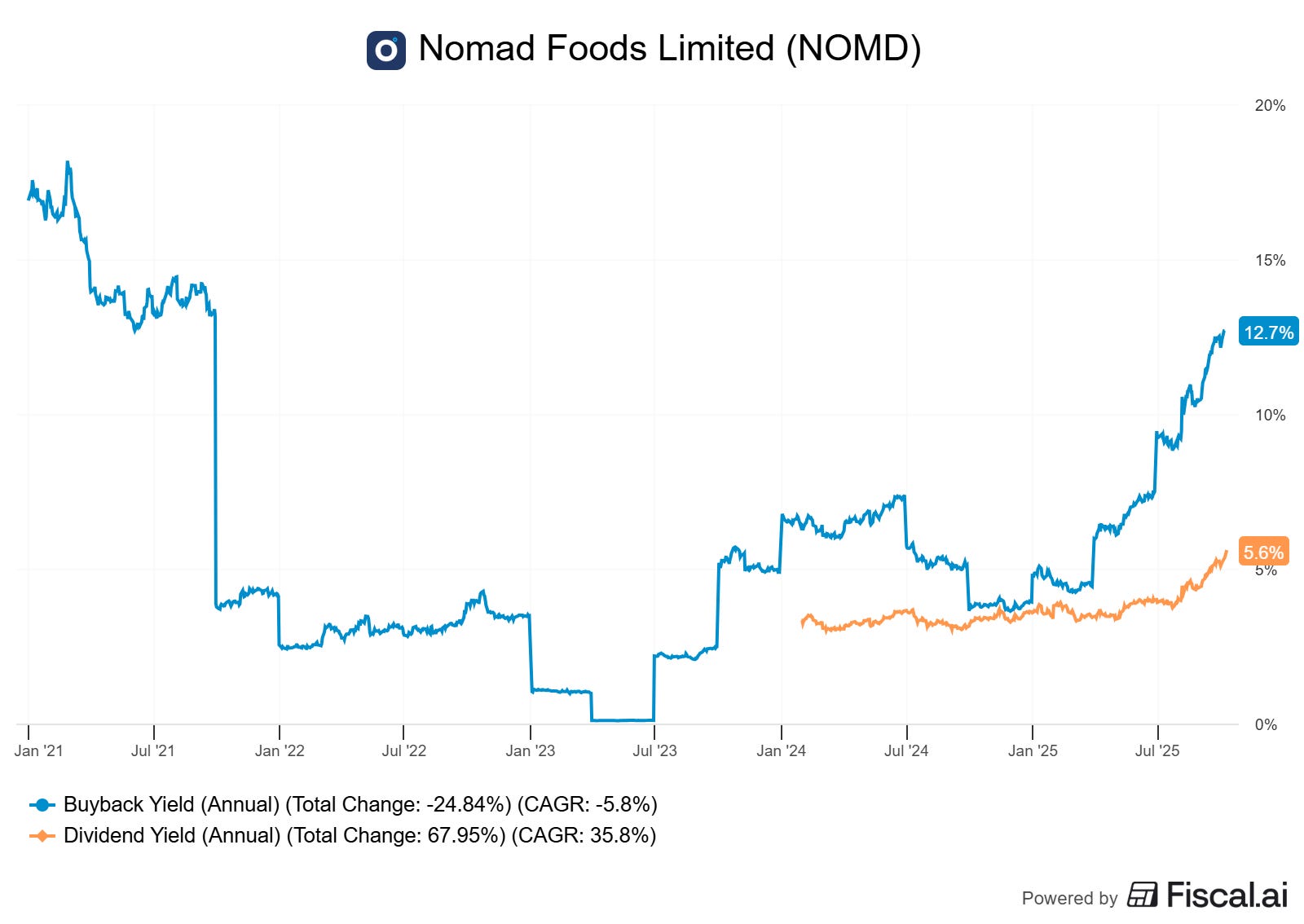
Since 2021, the total share count has fallen from 173.6 million to 142.4 million — an 18% reduction. Every remaining share now represents a larger slice of the company’s steady earnings base.
That’s how deep value quietly compounds: one buyback at a time.
The absurdly low multiple
At six times earnings, investors are paying less for Nomad Foods than for many cyclical or commodity businesses — even though this one sells branded consumer staples with stable demand.
A 5.7× P/E, 6.7× EV/EBITDA and 1.1× EV/sales valuation would make sense if the business were shrinking. It’s not.
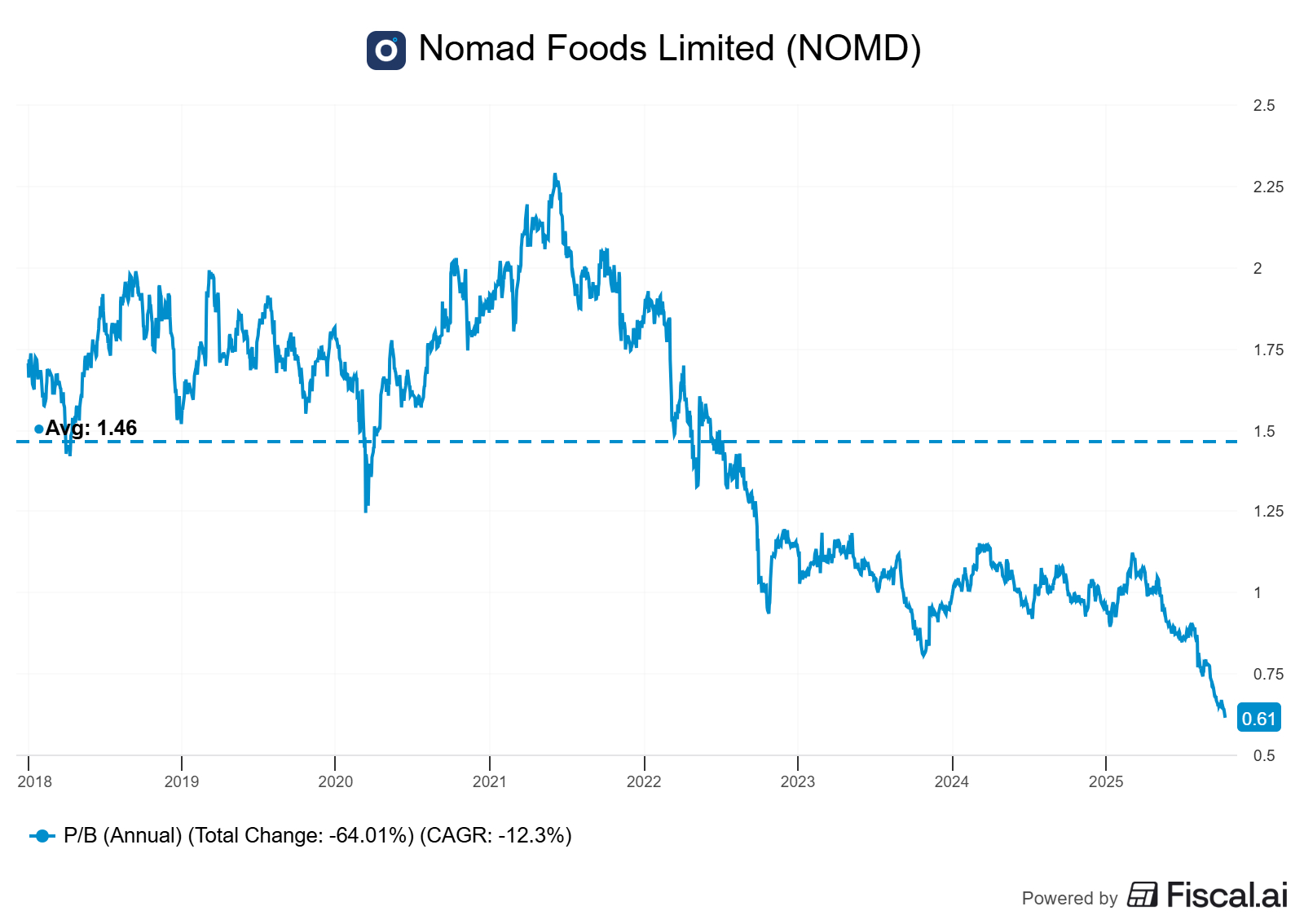
And to make things even more absurd — the stock also trades at just 0.6× book value.
Nomad continues to generate steady growth, strong cash flow, and consistent returns, year after year.
The disconnect between price and fundamentals here is striking.
What the market is missing
Markets love growth stories and flashy narratives. But Nomad doesn’t fit into any of them. It’s too stable for growth investors, too boring for momentum traders, and too small for the big consumer-staples funds dominated by Nestlé and Unilever.
That’s why the valuation has quietly drifted lower — not because the business has deteriorated, but because nobody’s paying attention.
For patient investors, that indifference is the opportunity.
The bottom line
Nomad Foods is everything you’d want in a deep value stock:
A stable, essential business with strong brands,
Predictable cash generation,
A massive buyback program quietly reducing the float,
A combined shareholder yield of 15%,
And a single-digit earnings multiple that borders on absurd.
At 5.7× forward earnings, you’re not just buying cheap — you’re buying quality at a discount.
This isn’t a turnaround story. It’s a cash machine trading like a troubled asset.
The kind of setup that, sooner or later, forces the market to reprice it upward.
— Deep Value Stocks