
The concession ends in seven months. The market seems to view that as a problem. I think it may be the catalyst.
Most investors prefer businesses with a long runway. In deep value investing, however, an expiration date can sometimes be a feature rather than a bug. If a company owns more assets than its market capitalization, generates cash until the end, and then returns that cash to shareholders, you do not necessarily need another decade of growth.
That is what makes Polish-listed Stalexport Autostrady interesting.
At PLN 1.77 per share, the company has a market capitalization of roughly PLN 438 million. Yet at the end of June it reported PLN 590.9 million of equity attributable to shareholders and PLN 688.2 million of cash and cash equivalents. In other words, the stock trades below book value and even below the cash sitting on the balance sheet.
There is, of course, a catch. Stalexport’s main business has an expiration date.
And that is precisely where the investment case becomes interesting.
A toll road with a fixed end date
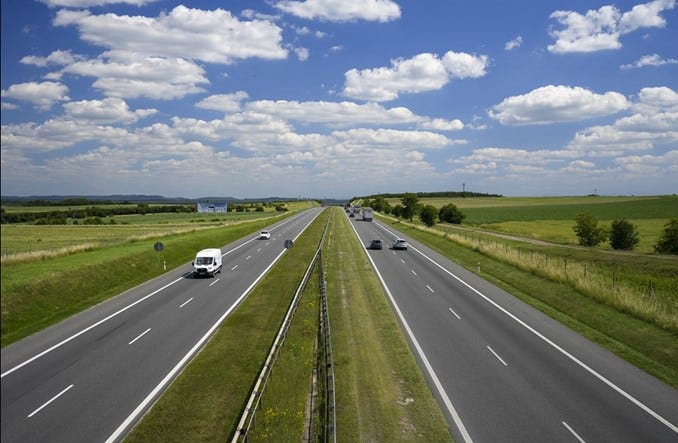
Stalexport’s value is overwhelmingly tied to its concession for the 61-kilometer A4 motorway between Katowice and Kraków. The concession expires on March 15, 2027. In the first half of 2026, activities related to this concession still generated 98.1% of group revenue. Management has explicitly concluded that, without an approved alternative strategy, there is currently no realistic alternative to terminating the group’s operating activities after the concession expires. The financial statements are therefore already being prepared on a non-going-concern basis.
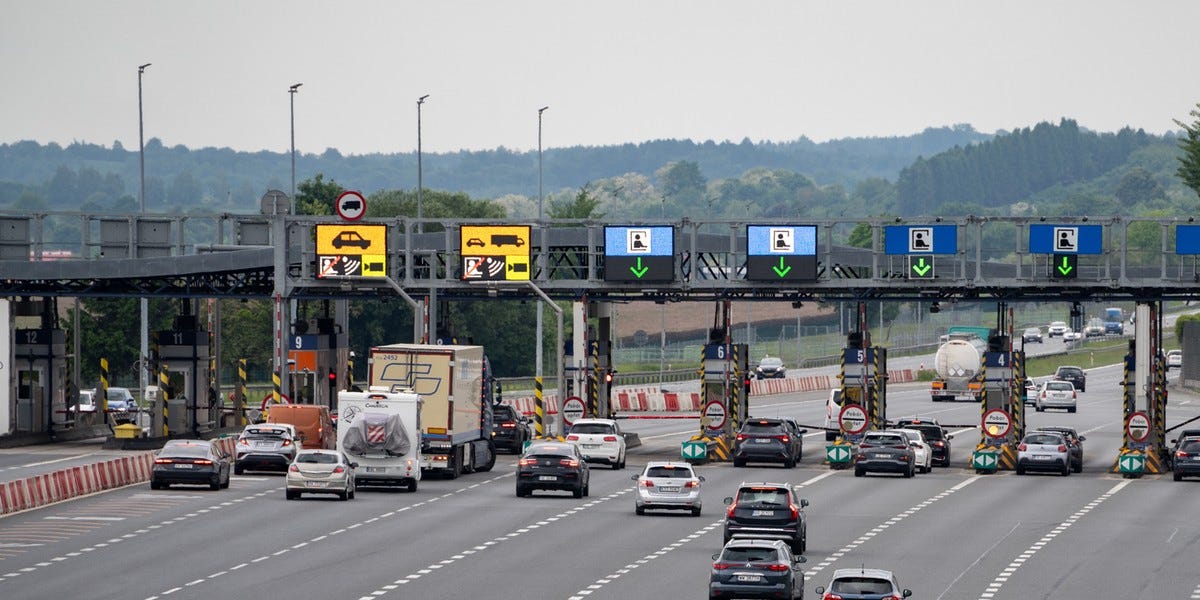
This is not a struggling business slowly running out of cash. The motorway remains highly profitable. First-half 2026 revenue reached PLN 325.1 million, while toll revenue increased 5% year over year to PLN 315.8 million, despite average daily traffic declining slightly.
The group generated EBITDA of roughly PLN 129 million and net income of approximately PLN 67 million during the first six months of the year.
So the company is not burning through its balance sheet while waiting for the concession to expire. It is still adding cash.
But after March 2027, the toll road business disappears.
For a conventional investor, that is a reason to stay away. For a deep value investor, the question is different:
What will happen to all the cash when the business ends?
The balance sheet is the investment case
At PLN 1.77, Stalexport has approximately 247.3 million shares outstanding, giving it a market capitalization of around PLN 438 million.
Against that:

The stock therefore trades at around 0.74x book value.
The headline cash figure is even more striking: Stalexport holds approximately PLN 250 million more cash than its entire market capitalization. Therefore it trades around 0.64x the value of its cash reserves.
That comparison needs an important qualification. The company also had PLN 358 million of total liabilities at the end of June, including PLN 141 million of current provisions. In addition, PLN 159 million of cash was restricted, largely because funds are reserved for motorway investments and maintenance obligations.
So this is not a case where investors can simply subtract the market cap from PLN 688 million and call the difference free money.
But even after making those adjustments, the valuation remains unusual.
The key number for me is the PLN 591 million of book equity, because the majority of the known obligations connected with the motorway are already reflected in the accounts. The market is valuing that equity at only PLN 438 million.
It is effectively assuming that around PLN 153 million of today’s book value will disappear before shareholders get their money back.
That is a substantial margin for things to go wrong.
The majority shareholder appears to want the cash back
This is where the investment case becomes more than a simple “cheap on paper” story.
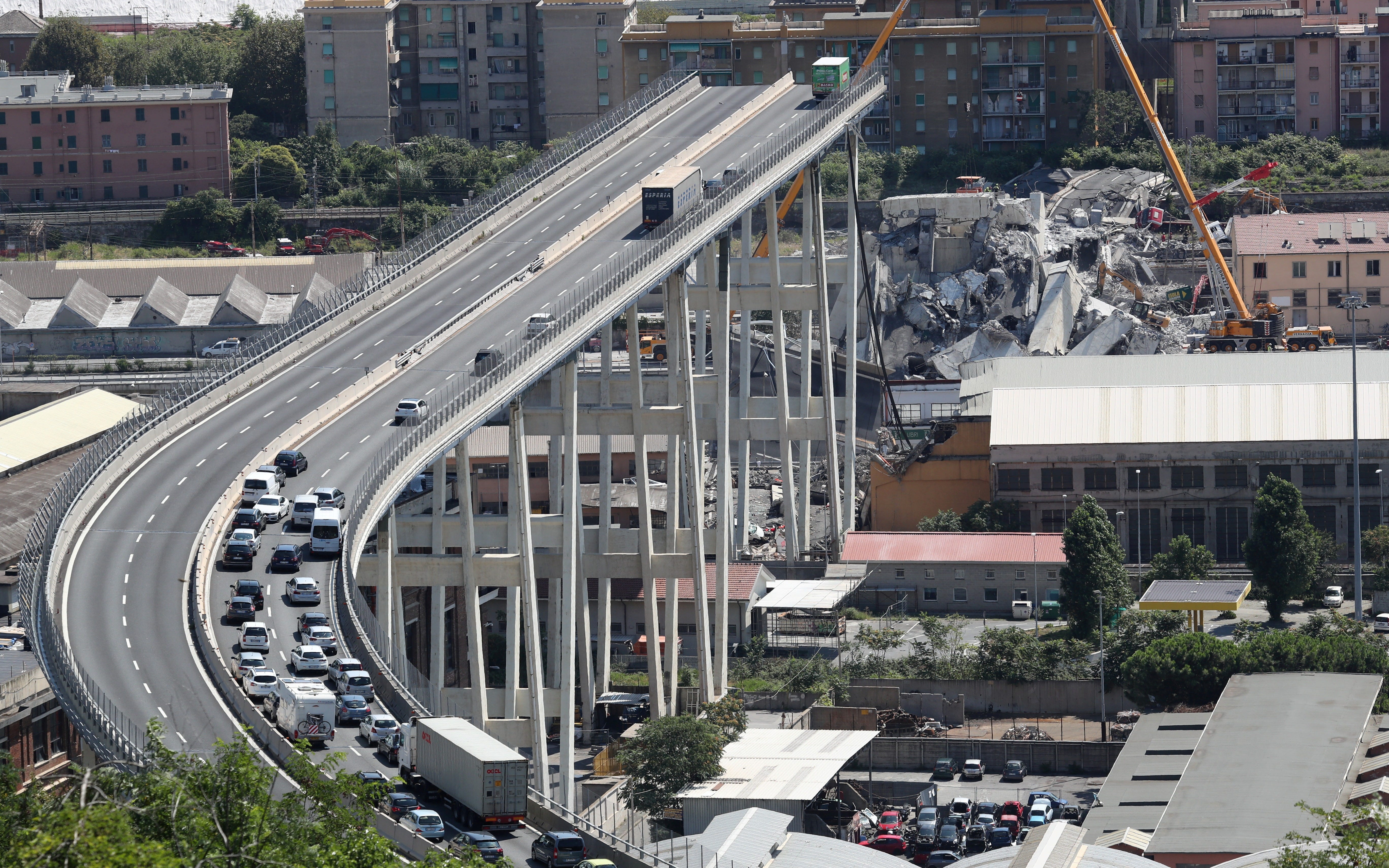
Mundys S.p.A. owns 61.2% of Stalexport. Mundys is the former Atlantia, once one of Europe’s largest listed infrastructure groups and the controlling shareholder of Italian motorway operator Autostrade per l’Italia. After the 2018 collapse of the Morandi Bridge in Genoa, which killed 43 people and triggered a prolonged political confrontation over the motorway concessions, Atlantia sold its 88% stake in Autostrade per l’Italia in 2022. Later that year, Atlantia itself was taken private by a consortium led by Edizione, the Benetton family’s investment holding company, together with Blackstone and Fondazione CRT, and was renamed Mundys in 2023.
Today, Mundys remains a major global transport-infrastructure investor, with interests in toll roads, airports and mobility services through businesses such as Abertis, Aeroporti di Roma and Telepass. In other words, Stalexport is controlled by a sophisticated infrastructure owner with extensive experience in concessions, asset sales and capital allocation.
That matters because Mundys effectively determines what happens next.
Earlier this year, management proposed a new strategy that would have transformed Stalexport after the concession expired, with investments in real estate, transport infrastructure and digital mobility.
Shareholders did not approve the strategy.
That decision matters enormously.
The company subsequently concluded that there was no realistic alternative to terminating operations after March 2027 and moved to non-going-concern accounting.
Then something even more interesting happened.
The Supervisory Board asked management to prepare a detailed liquidity model through the end of 2027, including a scenario in which share capital was reduced to the maximum extent possible without cancelling shares. The model was reviewed by an independent adviser, and management explicitly stated that further cash distributions would be considered once the motorway project had been completed and its final cash flows were known.
On August 5, shareholders approved a reduction in the nominal value of each share from PLN 0.75 to PLN 0.01, allowing approximately PLN 183 million, or PLN 0.74 per share, to be returned to shareholders. The resolution passed without dissent.
At the current share price, that distribution alone represents approximately 42% of the share price.
And this is not the first large cash return. Stalexport already paid a PLN 0.73 dividend in June 2026, following dividends of PLN 0.63 in 2025 and PLN 0.45 in 2024.
The pattern increasingly looks like monetization rather than empire building.
A liquidation has not been decided — yet
There is an important distinction here.
Stalexport has not formally announced that it will liquidate.
A separate shareholder vote would be required for that. Management itself emphasized this when announcing the capital reduction.
There is therefore still a scenario in which Stalexport survives as a smaller holding company after March 2027.
But I currently see little concrete evidence that this is what Mundys intends to do.
There is no approved replacement strategy, no major acquisition, no large property development under construction and no new infrastructure concession that could meaningfully replace the A4 business. Meanwhile, the majority shareholder has supported a large distribution of capital.
This does not prove liquidation.
It does, however, make a simple sequence increasingly plausible:
finish the concession, settle the remaining obligations, distribute the excess cash and eventually wind down the company or leave only a very small residual entity.
That is a very different investment proposition from trying to forecast earnings ten years into the future.
What could the company actually be worth in liquidation?
Book value is a useful starting point, but it should not be treated as liquidation value without adjustments.
At June 30, equity attributable to shareholders stood at PLN 590.9 million, equivalent to approximately PLN 2.39 per share.
There are two balance-sheet items where I would be particularly conservative.
The first is the remaining concession intangible asset. It had a carrying value of PLN 62.4 million at the end of June and will be fully amortized by the expiry of the concession.
That is not necessarily an additional PLN 62 million economic loss. Stalexport is still using the concession to generate revenue and earnings, and the amortization will run through the income statement as those earnings are generated. The important point is simply not to assign any terminal value to the concession itself.
The second is the PLN 46.4 million deferred tax asset.
Management has already adjusted its deferred tax calculations for the end of the concession and has declined to recognize another PLN 52.9 million of temporary differences it does not consider sufficiently likely to be realized.
So writing the entire PLN 46 million down to zero would probably be excessively conservative. But in a liquidation analysis I would still apply a haircut. Deferred tax assets are clearly less valuable than cash.
There will also be expenses that have not yet been fully provided for. Management explicitly states that provisions for other costs associated with discontinuing operations will only be recognized once the IAS 37 recognition criteria are met. These could include remaining employee costs, contract termination, advisers, administrative overhead during the wind-down and the formal costs of liquidating the legal entities.
I therefore prefer to use a range rather than pretending there is one precise liquidation value.

My base case assumes that some additional profit is generated before March 2027, but also applies a meaningful haircut to the deferred tax asset and reserves tens of millions of zloty for costs related to winding down the group.
The exact figures are debatable. The broader point is not.
The current market price already discounts a surprisingly large amount of value destruction.
Even a scenario with meaningful additional costs and asset write-downs can produce a value above the current market capitalization.
The PLN 0.74 distribution is an important catalyst
The approved capital reduction does not create value by itself.
If a company pays PLN 0.74 per share to shareholders, its share price should theoretically fall by roughly the same amount when the shares trade ex-distribution.
But that misses why the transaction matters.
For a liquidation-value investment, the biggest risks are often time and capital allocation. A company can remain “cheap” for years while management refuses to release the assets that make it cheap.
Returning PLN 183 million changes that equation.
At today’s price of PLN 1.77, almost 42% of the purchase price is scheduled to come back to shareholders through the capital reduction once the legal process has been completed. That dramatically reduces the amount of capital left exposed to whatever happens after March 2027.
And management has already stated that further distributions will be considered once the final cash flows of the motorway project are known.
That is exactly the type of catalyst I want to see in a deep value situation.
What could go wrong?
The largest risk is that the eventual wind-down costs are considerably higher than expected. The motorway has to be handed back in the required condition, and although substantial provisions already exist, construction costs or final settlement claims could exceed current estimates.
The deferred tax asset could also prove less valuable than its accounting carrying value.
There is additionally no guarantee that Stalexport will be formally liquidated. Mundys could eventually decide to retain part of the remaining capital and pursue another business. This is arguably the biggest strategic risk because minority shareholders have very little ability to stop the controlling shareholder from changing direction.
The timing also matters. The PLN 0.74 capital reduction has been approved, but shareholders still have to wait for the required legal and registration process before the cash is distributed.
Finally, this is a Polish small-cap special situation. Liquidity is limited, the structure is somewhat complex and the market may continue to apply a discount until the final outcome becomes obvious.
None of those risks should be ignored.
But at PLN 1.77, I believe investors are being compensated for them.
The investment case
I do not view Stalexport Autostrady as an investment in a toll-road operator.
I view it as a pile of assets and cash with a rapidly approaching realization date.
The operating business has only months left, but it remains profitable. The company has PLN 591 million of book equity against a PLN 438 million market capitalization. It holds PLN 688 million in cash. The majority shareholder rejected the proposed diversification strategy and subsequently supported a PLN 183 million return of capital. Management is using non-going-concern accounting and explicitly plans to revisit further cash distributions once the concession has been completed.
A formal liquidation is not yet guaranteed, and that uncertainty is exactly why the stock trades where it does.
But the current valuation does not require a perfect outcome.
At PLN 1.77, Stalexport trades approximately 26% below book value, while a conservative liquidation analysis suggests a value around PLN 2.20 per share and a more favorable outcome could approach PLN 2.40.
More importantly, PLN 0.74 per share is already on its way back to shareholders.
Deep value investing is usually about buying assets for less than they are worth and waiting for something to close the gap.
With Stalexport, the clock is already ticking.
Disclosure: This article represents my personal analysis and is not investment advice. Investors should conduct their own research.
Why don’t you include future profits from Q226 through Q127 (up to March 15) in your valuation? I estimate that Stalexport could generate around 80–100 million PLN in net profit during that period. That would add another ~0,30+ PLN (per share) to your valuation.
Interesting investment case. Thanks!